
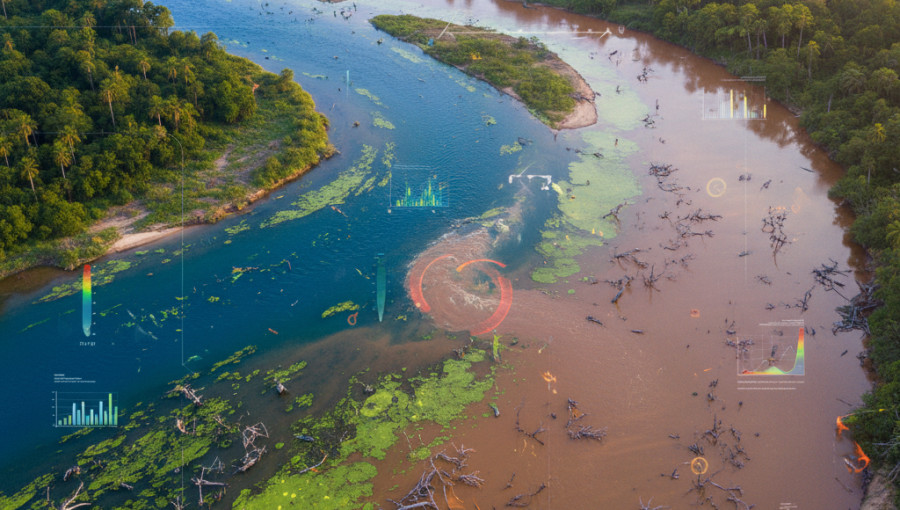
A new study published in Science Advances reveals that global river systems are experiencing a significant, long-term decline in dissolved oxygen levels. By analyzing data from over 21,000 river reaches between 1985 and 2023, researchers discovered that nearly 79% of these waterways are losing oxygen, a trend that threatens aquatic biodiversity and ecosystem health. While climate warming is the primary driver, tropical rivers are proving to be the most vulnerable to these changes. The findings underscore an urgent need for targeted environmental strategies to protect freshwater habitats from the compounding effects of rising temperatures and heatwaves.
Led by Professor Kun Shi of the Nanjing Institute of Geography and Limnology, the research team utilized machine-learning algorithms to track oxygen trends over four decades. The data shows an average decline of -0.045 mg L-1 per decade. Contrary to expectations that higher latitudes would suffer most due to intense warming, the study identified tropical rivers as the most at-risk. Because these regions already maintain lower baseline oxygen concentrations, even minor reductions significantly increase the danger of hypoxia, which can be lethal to fish and other aquatic organisms.
The research highlights that climate warming is responsible for 62.7% of the observed oxygen loss, primarily through decreased oxygen solubility. Heatwaves also play a substantial role, contributing to 22.7% of the decline and accelerating the rate of deoxygenation. Furthermore, the study examined how human-altered flow patterns and dam construction influence these trends. While extreme low-flow or high-flow conditions can sometimes mitigate oxygen loss, the impact of dams varies based on reservoir depth; shallow reservoirs tend to worsen the problem, whereas deeper ones may offer some protection against rapid deoxygenation.
These findings provide a critical scientific framework for policymakers tasked with managing freshwater resources. Given that ecosystem metabolism and climate-driven temperature increases are fundamentally altering lotic ecosystems, the researchers emphasize that tropical regions must become a primary focus for conservation efforts. By understanding the specific drivers of oxygen depletion—ranging from regional heatwaves to reservoir management—authorities can better develop strategies to preserve the health of river systems and the vital life they support.