
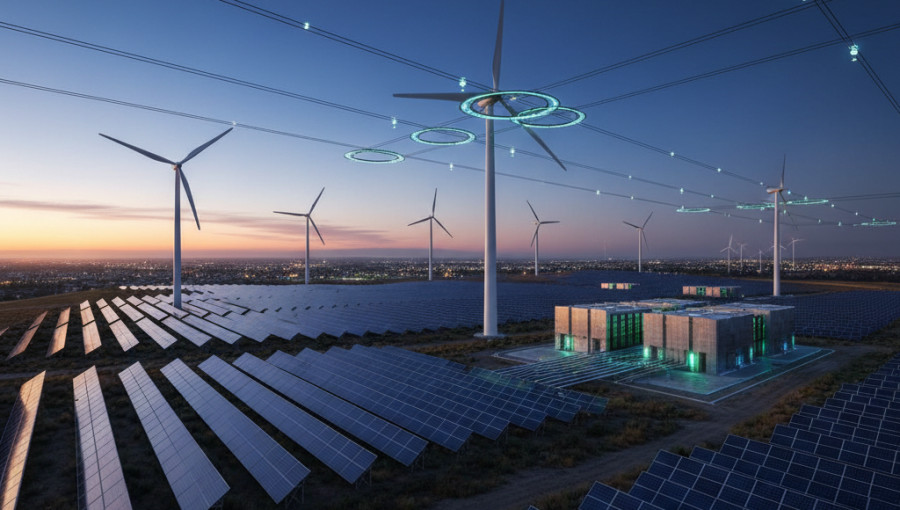
The long-standing argument that renewable energy is too intermittent to provide reliable power is losing its validity. A new report from the International Renewable Energy Agency (IRENA) suggests that by combining solar panels, wind turbines, and battery storage, developers can now deliver “firm power” around the clock. In regions with high-quality natural resources, these hybrid systems are becoming cost-competitive with new fossil fuel plants. While the United States faces higher structural costs, global leaders like China are already demonstrating that these clean energy megaprojects can provide reliable, 24/7 electricity at prices that rival traditional gas-fired generation.
For years, the primary metric for renewable energy has been the levelized cost of energy, which favors solar and wind because they do not require fuel. However, this metric fails to account for the need for backup power when the sun is not shining or the wind is not blowing. Utilities have historically relied on fossil fuel plants to bridge these gaps. Now, the falling costs of lithium-ion batteries and the ability to overbuild renewable capacity are changing this dynamic, allowing for a more consistent and reliable energy supply that does not rely on burning gas or coal.
The economic viability of these projects is already being proven in real-world applications. In China, data from 2024 indicates that many solar-plus-battery installations can provide firm power at costs lower than the benchmark for new gas plants. Similar trends are emerging in Brazil, South Africa, and the Persian Gulf. By blending wind and solar—which often have complementary production patterns—with battery storage, developers can significantly reduce the premium typically associated with firming up renewable energy.
While the U.S. currently deals with higher equipment and financing costs, the potential for cost reduction over the next decade remains significant. Major corporations, including Google, are already showing interest in these configurations to meet their energy needs. Projects like the massive Khavda development in India and various initiatives in the Tibetan Plateau and West Texas serve as early indicators of this shift. As these technologies continue to mature and decrease in price, the transition toward round-the-clock renewable energy is moving from a theoretical possibility to a practical, commercially attractive reality for global power grids.