
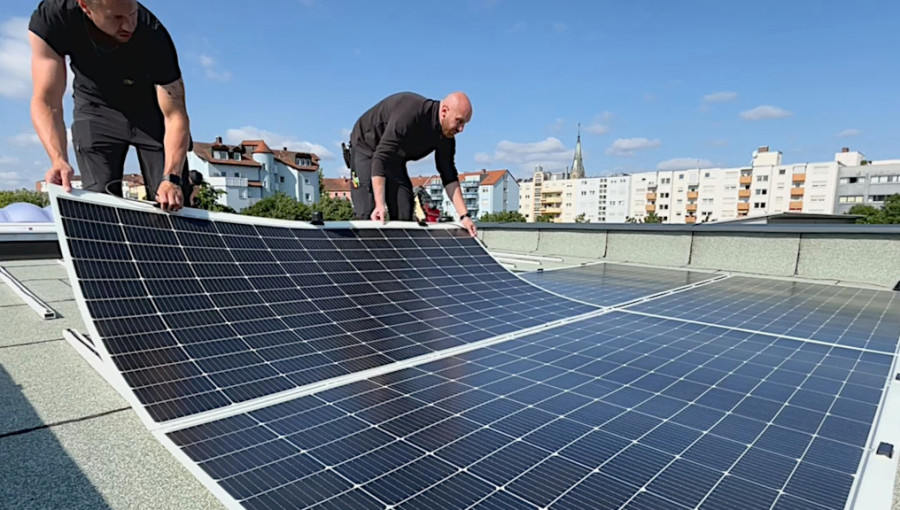
A new generation of lightweight, glass-free solar modules is opening up vast new surfaces for renewable energy generation. Service provider Osnatech has expanded its portfolio by partnering with manufacturer Euronergy, complementing its existing collaboration with Sunman. These innovative solutions are designed for installation on roofs and facades with low load-bearing capacity, such as industrial buildings and heritage sites, which were previously considered unsuitable for conventional, heavier solar panels. This development unlocks significant potential for increasing clean energy production in urban and industrial environments.
The market for solar installations is being revolutionized by lightweight alternatives that challenge the long-held association of photovoltaics with heavy, glass-based modules. In Germany alone, an estimated 1.2 billion square meters of surface area on industrial flat roofs, historically protected buildings, and complex facades have been largely untapped for solar power. These new, glass-free solar modules are engineered specifically to address the structural limitations of such properties, making solar energy a viable option where it was once impossible.
To meet growing demand for these specialized solutions, Osnatech has broadened its partner network. The company serves as the main distributor for Sunman in the Germany, Austria, and Switzerland region and, as of this year, is the exclusive distributor for Euronergy. Both manufacturers are recognized for their commitment to product safety, offering certified modules that meet all regulatory standards and come with long-term product warranties. This ensures that projects meet stringent technical and design requirements.
Osnatech anticipates installing approximately 120,000 square meters of these lightweight modules by the end of 2024. This effort is projected to generate 20 gigawatt-hours of clean electricity annually, resulting in a CO2 emission reduction of over 8,200 tonnes. The versatility of the technology is a key advantage, with modules available in various colors to suit architecturally sensitive projects, including listed buildings. According to Managing Director Matthias Mittelviefhaus, the modules can be installed on virtually any roof or facade.
The installation process for these systems is notably efficient. Using specialized adhesives and skilled technicians, surfaces like foil roofs can be transformed into power-generating assets in as little as three days. A recent project at the Joseph Hubert construction firm in Fürth demonstrated this speed, where a complete system of 123 ultra-light solar modules was installed in just 72 hours following a detailed planning phase.