Adding Wind Power Cuts Solar and Battery Storage Costs Significantly
Integrating wind energy into renewable systems reduces battery requirements and lowers the cost of meeting electricity demand globally.
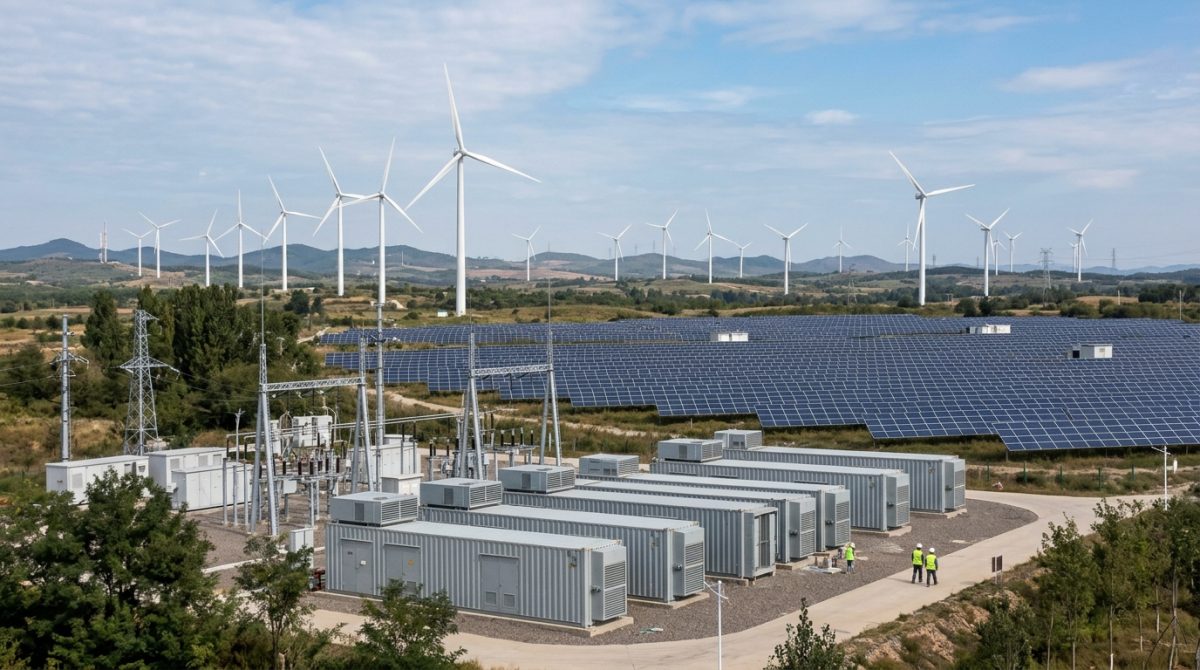
A new analysis from the energy think tank Ember indicates that incorporating wind power into solar and battery storage systems can reduce the cost of supplying reliable electricity by nearly 20%. By offsetting periods of low solar output, wind energy decreases the amount of battery capacity required to maintain a consistent power supply, making renewable energy more economically competitive on a global scale.
The study, conducted alongside the Global Wind Energy Council, found that the median cost to meet 90% of electricity demand drops from $105 to $86 per megawatt-hour when wind is added to solar and battery configurations. This shift is driven by the complementary nature of wind and solar, which vary in output across different times of day and seasons. Consequently, the battery storage duration needed to meet 90% of demand falls from 20 hours to 12 hours in the United States, with similar reductions observed in China and Europe.
These cost savings expand the reach of affordable renewable energy. Regions representing 75% of global electricity demand can now meet 90% of their needs at less than $100 per megawatt-hour by combining all three technologies, compared to only 50% of regions using solar and batteries alone. Daan Walter, a principal at Ember, noted that this combination allows for reliable power delivery at low costs almost everywhere.
The research also highlights the economic challenges for planned fossil fuel projects. Ember identified 845 GW of coal and gas capacity currently in development worldwide. With the inclusion of wind, the share of these projects located in regions where renewable alternatives are cheaper than $100 per megawatt-hour increases from 71% to 90%. In China, the addition of wind makes an extra 91 GW of planned fossil fuel capacity less cost-effective than renewable options.
Furthermore, the study examined the frequency of low-output periods. While a week of low solar output occurs globally about four times per year, a week where both wind and solar output are low occurs only once every four years on average. This reliability suggests that for many investors, renewable alternatives already provide a cheaper, long-term solution compared to new coal or gas plants.