Bangladesh Development Organization Deploys Solar Powered Irrigation Vehicle
The three-wheeled Ponkhiraj vehicle provides a low-cost, emission-free alternative to diesel-powered pumps for rural farmers.
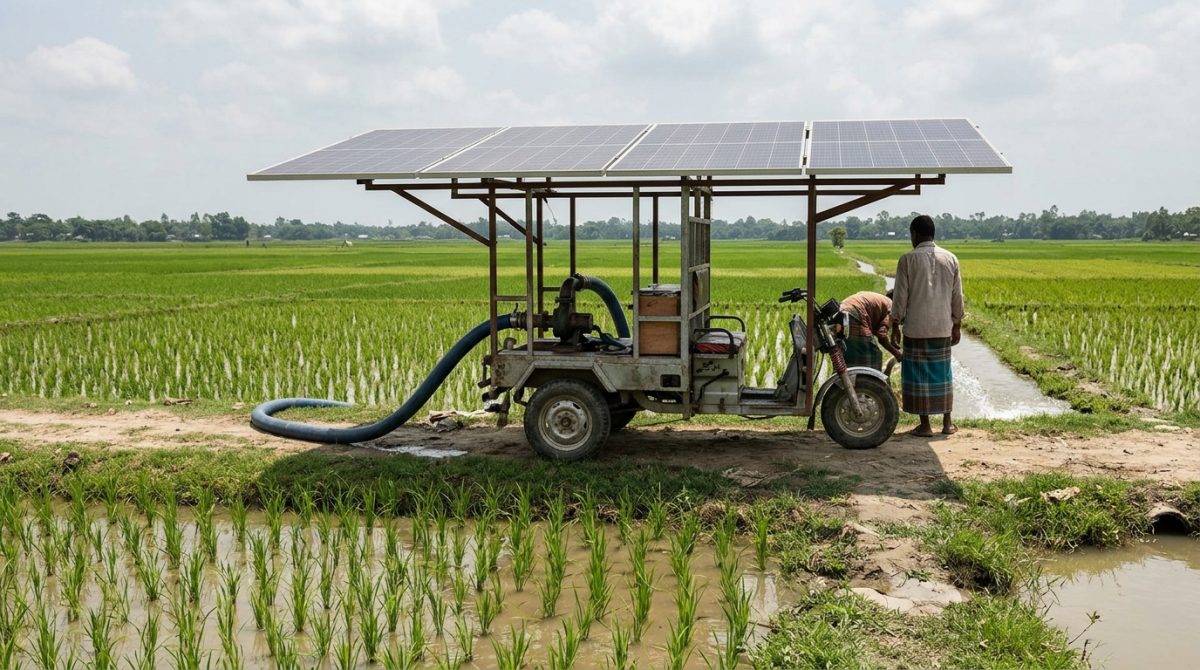
The global development organization BRAC has introduced a solar-powered vehicle designed to assist rural farmers in Bangladesh with field irrigation. Named Ponkhiraj after a mythical flying horse, the three-wheeled machine aims to reduce reliance on expensive imported diesel, which has become increasingly unaffordable for local agricultural workers due to rising fuel prices.
The vehicle features a 3.3-kW array of monocrystalline solar panels that unfold when the unit is stationary. This system powers a 3-hp pump through a hybrid controller, allowing the device to draw water from nearby canals or lakes. The pump can deliver water to fields at a rate of up to 60,000 liters per hour. According to BRAC, the system can irrigate approximately 1 hectare of land per day.
Operating costs for the solar-powered system are estimated at about 80 cents per day, significantly lower than the US$8 required to operate a traditional diesel pump for the same duration. Beyond irrigation, the vehicle produces no carbon emissions or toxic exhaust, and its onboard batteries can function as a mobile power source.
The Ponkhiraj is built upon a modified electric version of the Tempu, a common cargo and passenger vehicle in Bangladesh. Its design allows it to navigate narrow rural roads, enabling operators to travel between farms to provide irrigation services. BRAC is currently expanding production of the vehicles with plans to introduce the technology to other developing nations.