
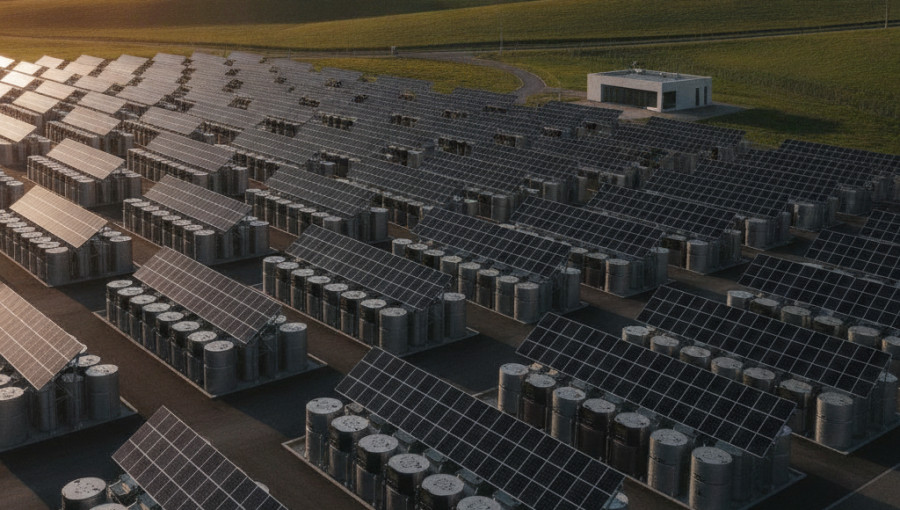
Europe’s battery storage sector reached a significant milestone in 2025, with total operational capacity surpassing 100 gigawatt-hours. According to SolarPower Europe’s latest market outlook, the industry saw a 48 percent annual growth rate, driven largely by a shift toward large-scale, grid-connected battery projects. While Germany, the United Kingdom, and Italy remain the dominant players, new markets like Bulgaria and Ukraine have emerged as top performers. Despite this rapid expansion, experts warn that current growth trajectories may fall short of the 600 gigawatt-hour capacity required to ensure a secure and affordable energy system by 2030.
The market landscape is evolving, with large-scale battery installations accounting for over half of all new capacity in 2025. This surge is attributed to falling technology costs, the rising demand for system flexibility, and the increasing prevalence of hybrid projects that pair solar panels with storage. While the residential sector for home batteries faced challenges, analysts anticipate a recovery in 2026, fueled by the adoption of dynamic energy tariffs and a growing consumer desire for energy independence. Notably, the ratio of solar panel capacity to battery storage improved to 8-to-1 in 2025, down from 10-to-1 the previous year.
Looking ahead, the industry expects annual installations to exceed 50 gigawatt-hours in 2026, with projections suggesting that total capacity could reach 470 gigawatt-hours by 2030. However, SolarPower Europe emphasizes that reaching this scale requires more than just current momentum. To meet the EU’s ambitious energy goals, the organization is calling for a dedicated battery storage action plan. This framework would focus on streamlining permitting processes, simplifying grid connections, eliminating double taxation on energy storage, and ensuring fair market access to provide the long-term certainty necessary for large-scale investment.