Massachusetts Cranberry Bogs Host First Operational Agrivoltaic Solar Installations
Two solar arrays in Kingston and Plymouth are successfully harvesting cranberries beneath panels, demonstrating a new model for agricultural land use in the state.
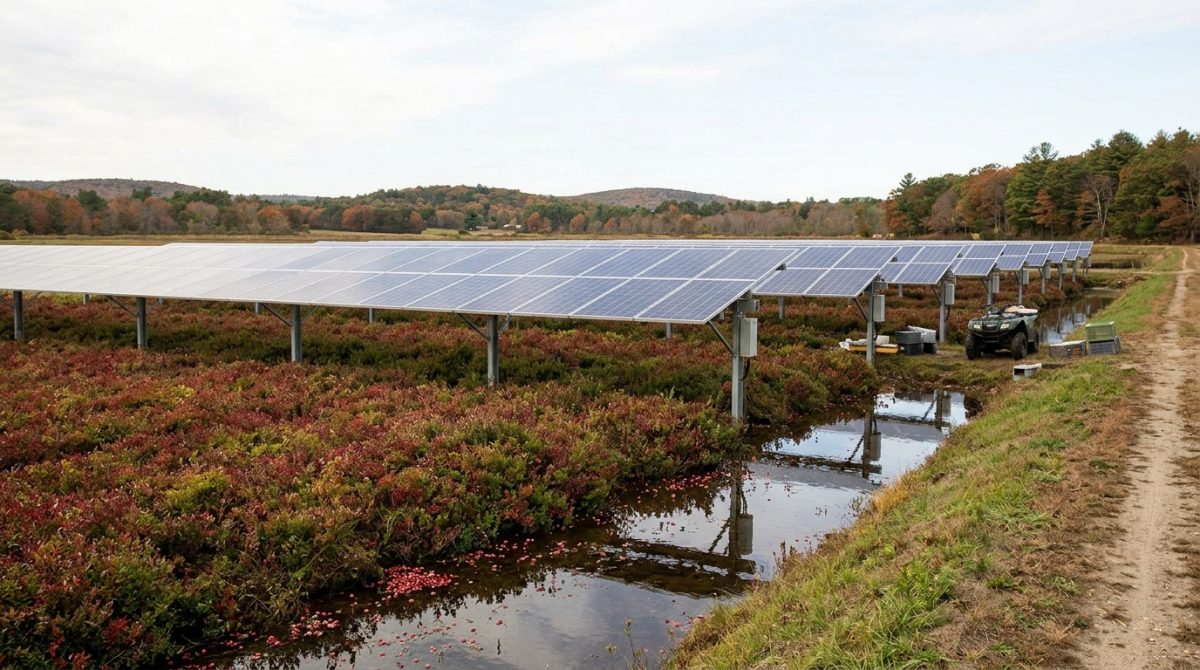
Cranberry growers in southeastern Massachusetts are successfully harvesting fruit from beneath solar panels, marking the first time such dual-use operations have become fully operational. The projects, located in the towns of Kingston and Plymouth, feature a 4.4-megawatt solar array paired with a 13.5-megawatt-hour battery and a 1-megawatt solar array, respectively. This fall represents the second harvest season for the sites.
The initiative is part of a broader push toward agrivoltaics, a strategy encouraged by Massachusetts to generate renewable energy on farmland without removing it from production. The state provides a financial incentive for these projects, offering an additional 9 cents per kilowatt-hour on top of the base rate for solar arrays between 1 MW and 5 MW. This model provides a financial lifeline for cranberry farmers, whose bogs are protected wetlands that cannot be developed for housing or commercial use.
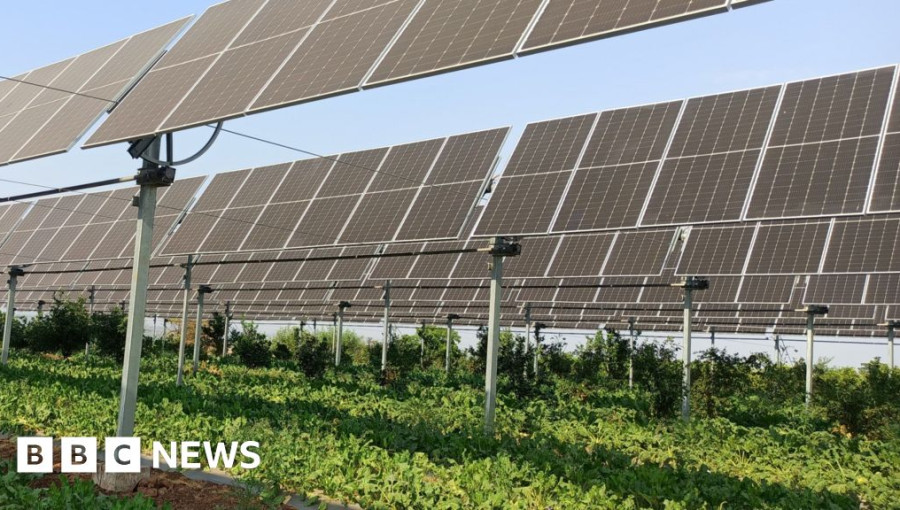
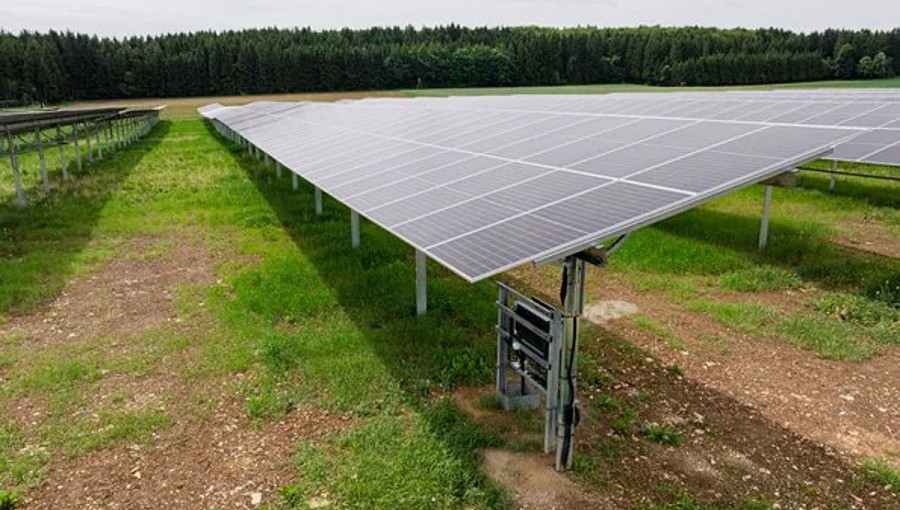
Constructing solar arrays over cranberry bogs presented unique engineering challenges. Because the ground is soft, developers had to sink pilings deeper than the standard 2.4 to 3 meters to reach stable soil. Additionally, electrical wiring had to be installed overhead rather than underground. The photovoltaic panels are mounted 3 meters above the ground on a tracking axis, with pilings spaced widely to accommodate harvesting machinery.
The projects were developed by Distributed Energy Infrastructure in collaboration with Greenbacker Renewables, which purchased the land. The agricultural operations are managed by a local consultant and farmer. While these two sites are currently operational, another project in the town of Carver remains stalled following the bankruptcy of its original developer, though the current owner intends to complete it.
The success of these installations has encouraged further agrivoltaic development in the region, with Distributed Energy Infrastructure now pursuing projects in apple orchards, cattle pastures, and Christmas tree farms. Proponents believe that as the industry gains experience and refines its design methods, the adoption of solar-integrated farming will continue to accelerate.