North Carolina Neighborhood Builds Resilience With Community Solar Projects
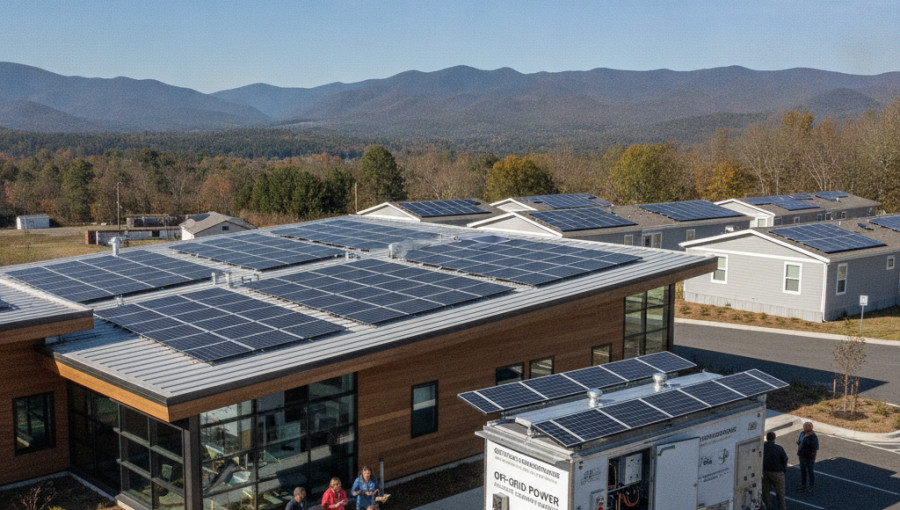
Nearly two years after Hurricane Helene devastated Asheville, North Carolina, the immigrant neighborhood of Emma is turning to solar energy to bolster its disaster resilience and reduce utility costs. A new 46-kilowatt rooftop solar array at the La Esperanza community center marks a significant step in this effort. By integrating portable solar trailers and innovative solar-equipped porches for manufactured homes, local organizations are creating sustainable, community-led energy solutions. These initiatives provide essential power for water pumps and repair equipment during grid outages, proving that renewable energy can be an accessible tool for vulnerable communities facing increasingly extreme weather.
The project at the La Esperanza community center, managed by the neighborhood alliance Poder Emma, features over 100 solar panels. This installation reduces the center’s reliance on the electrical grid, lowering monthly utility bills for the collective. The initiative was made possible through a collaboration between the Footprint Project, which donated the panels, and Sugar Hollow Solar, which handled the installation. Invest Appalachia provided critical financial support through a bridge loan, ensuring the project remained viable while awaiting federal rebates.
To address the high cost of traditional stationary battery backups, the community adopted a creative, mobile alternative. A solar-powered trailer equipped with 900 watts of panels and a battery serves as a portable generator. This system powers essential services during emergencies, including internet access, refrigeration, and a community-drilled water well. Beyond disaster relief, the trailer provides a reliable power source for the neighborhood’s home repair crew, allowing them to operate heavy tools without overloading the electrical systems of the houses they are renovating.
Poder Emma and Sugar Hollow Solar are also piloting a unique approach to bring solar energy to manufactured homes, which are common in the area but often lack the structural integrity to support rooftop panels. By constructing custom-built porches and installing solar modules on their roofs, the team has created a multipurpose solution that provides both renewable energy and a community gathering space. A successful pilot project involving 15 panels and a battery backup has demonstrated the feasibility of this model, with organizers hoping to expand the program to more households in the future.