Portugal Mandates Grid-Forming Capabilities For Large Battery Storage Facilities
New regulatory requirements for battery plants aim to bolster grid stability as the country expands its storage capacity to meet national energy targets.
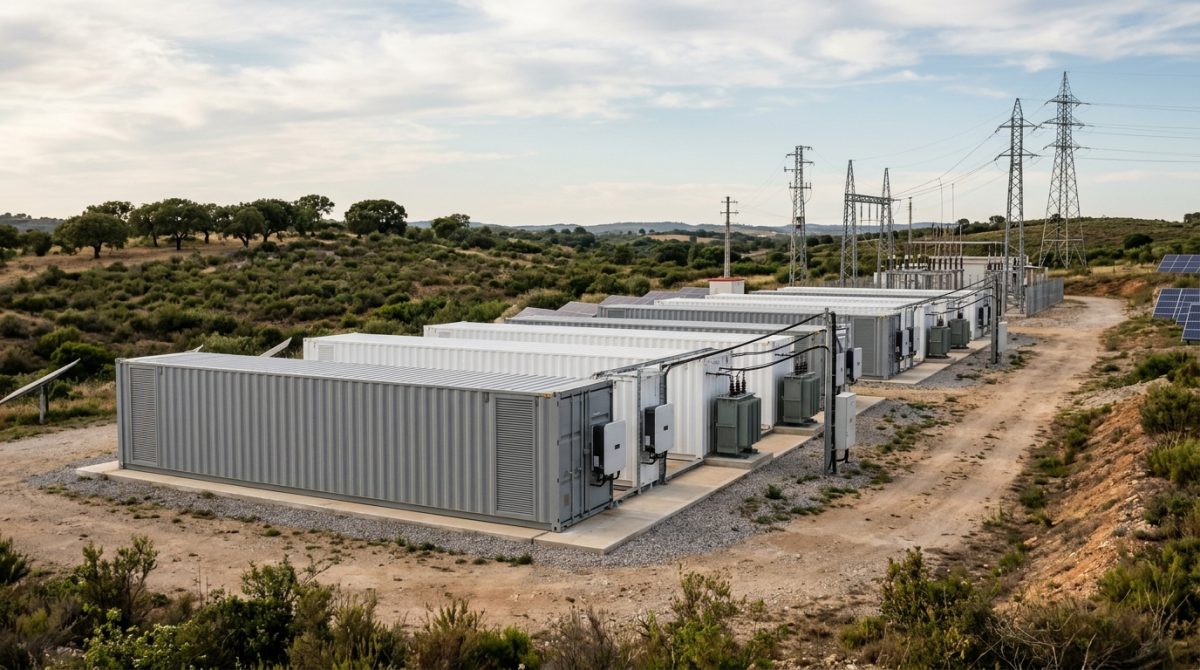
Portugal has introduced a new regulatory ordinance requiring large battery storage plants to provide grid-forming capability and synthetic inertia. Effective from October 23, the rules apply to new connection requests for facilities connected to the transmission grid or those rated at 45 MW or higher. The mandate aims to support power system stability as the country scales up its storage infrastructure.
Signed by Secretary of State for Energy Jean Paulo Gil Barroca, the ordinance extends requirements previously reserved for generating units to battery storage systems. Facilities with a capacity of 500 kW or more are now required to automatically switch from charging to discharging if grid frequency drops. For plants between 10 MW and 45 MW, grid-forming obligations are determined by specific grid capacity titles, permits, or tender documentation.
The technical standards, developed in collaboration with European industry bodies including ENTSO-E and SolarPower Europe, require plants to manage frequency deviations between 47.0 Hz and 52.5 Hz. Facilities must emulate inertia with a mechanical starting time adjustable between 1 and 20 seconds, alongside a damping ratio of at least 10% for power oscillations. Pumped hydro and other storage technologies providing synchronous inertia are exempt from these specific grid-forming requirements.
Additional rules mandate that plants of 1 MW or larger must be capable of providing frequency containment and restoration reserves, as well as voltage and reactive power control. These facilities must also provide grid operators with real-time monitoring and remote control capabilities. While the ordinance does not require operators to maintain a specific state of charge, it allows grid operators to issue power instructions during emergencies or congestion.
The government implemented these measures ahead of revisions to the European Union’s generator connection code to align with Portugal’s national storage strategy. The country aims to reach 6.9 GW of storage capacity by 2030. According to the renewable energy association APREN, Portugal had 20 MW of battery storage in operation at the end of 2025, with further growth expected from recent government-backed funding initiatives totaling 500 MW.