Research Finds Broccoli Grows Successfully Under Magenta Tinted Solar Panels
A study shows that integrating solar energy and horticulture can increase total land productivity despite longer crop growth cycles.
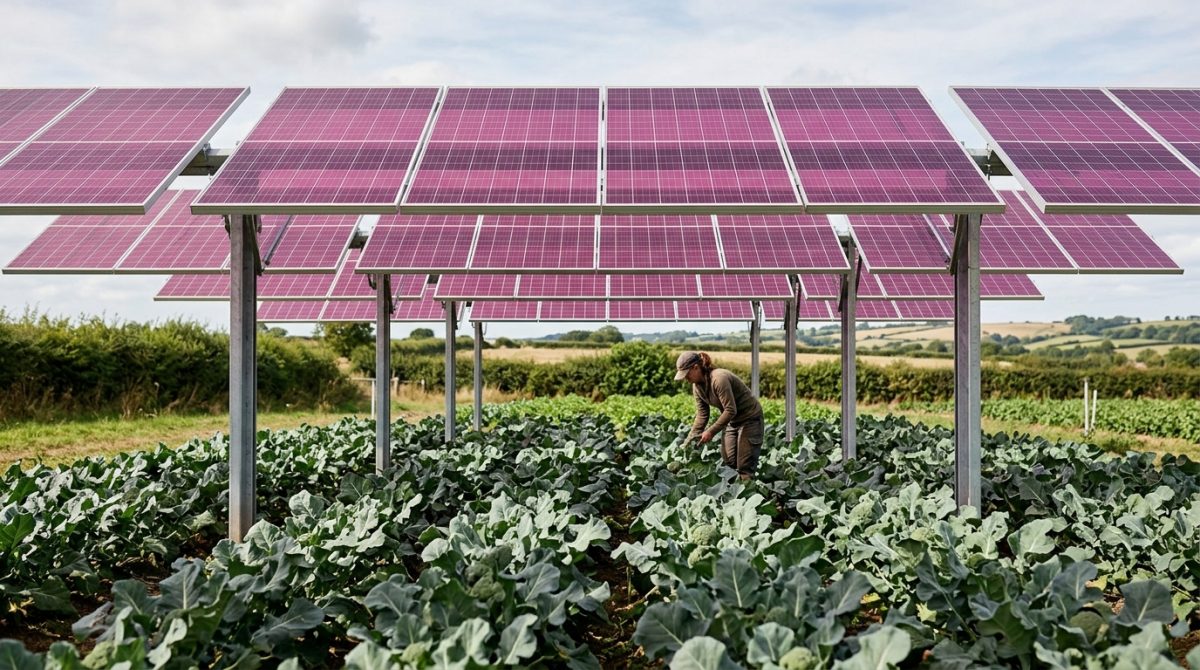
A research team from Sweden and Italy has demonstrated that broccoli can be grown under semi-transparent, magenta-tinted solar panels. While the vegetables took 30 per cent longer to reach maturity compared to those grown in full sunlight, they achieved similar final sizes. The study, conducted at the Kärrbo Prästgård organic research farm in Sweden, suggests that such systems can effectively combine food production with electricity generation.
The research utilized cadmium-telluride modules designed with gaps to allow either 50 per cent or 70 per cent of sunlight to reach the crops, while a magenta filter adjusted the light wavelengths. The study found that plants under the 50 per cent transparent system produced 0.54 tonnes of dry mass per hectare, compared to 0.66 tonnes in open-field conditions. Although macronutrient levels remained comparable to those in full sun, the researchers noted a reduction in micronutrients.
The integrated system achieved a land equivalent ratio of 1.18, meaning that one hectare of combined solar and horticulture could produce the same total output as 1.18 hectares dedicated to either farming or solar alone. During the June to October trial, the 50 per cent transparent system generated an estimated 447.6 kilowatt-hours of power. The authors noted that the results could potentially improve with modern technologies such as organic photovoltaics or silicon-based cells.
Led by Silvia Ma Lu of Mälardalen University, the study highlights the potential for wavelength-selective photovoltaic technology to address land-use constraints. As political pressure and land availability issues grow in regions like Europe, there is increasing interest in dual-use systems. Similar initiatives are underway elsewhere, including testing in Australia by Charles Sturt University and interest from the South Australian wine industry in using solar shading to protect crops from intense heat.