Researchers Develop Biohybrid Mesh To Harvest Energy From Human Heart Cells
The ultrathin, flexible electronic mesh converts mechanical movements from living cells into electricity for potential use in medical implants.
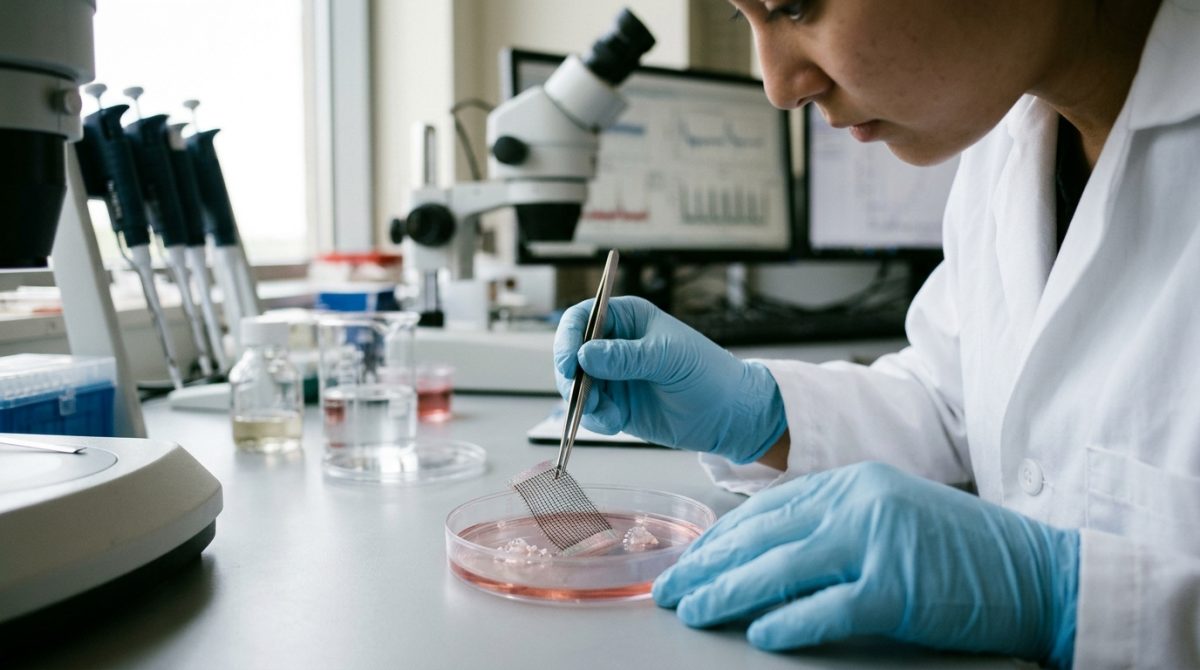
Scientists at the University of Massachusetts Amherst have created an ultrathin, flexible electronic mesh designed to integrate with human heart cells and convert their mechanical contractions into electrical energy. This biohybrid harvester features a network of tiny piezoelectric generators that allow living cells to grow through and around the structure, enabling a more efficient energy capture process compared to traditional centralized devices.
The device utilizes ribbons of lead zirconate titanate, a piezoelectric ceramic that generates an electrical charge when deformed. By embedding these ribbons into a flexible polymer mesh, the researchers created a system that moves in sync with biological tissue. Laboratory tests indicated that this distributed architecture achieves an effective energy density more than ten times higher than conventional energy-harvesting methods.
Current medical implants and wearable electronics often rely on bulky batteries that require replacement or recharging, posing risks for patients and limiting device longevity. The researchers suggest that this new mesh could eventually power low-power biointegrated electronics, such as pacemakers, neurostimulators, and cardiac monitoring systems. Because the material is thin and flexible, it could potentially be layered to increase power output without adding significant bulk.
Jun Yao, the paper’s senior author and an associate professor at the university, noted that integrating devices at the cellular level improves biocompatibility and reduces the body's tendency to reject foreign systems. While the technology shows promise, it remains in the early stages of development. The team has only tested the mesh in laboratory-grown cardiac tissue and must still address challenges regarding long-term durability and the safe isolation of lead-based components within the body.