Researchers Develop Silver-Based Additive To Improve Lithium Battery Performance
A new anode-free battery design achieves high energy density and maintains 90 percent capacity after 200 cycles.
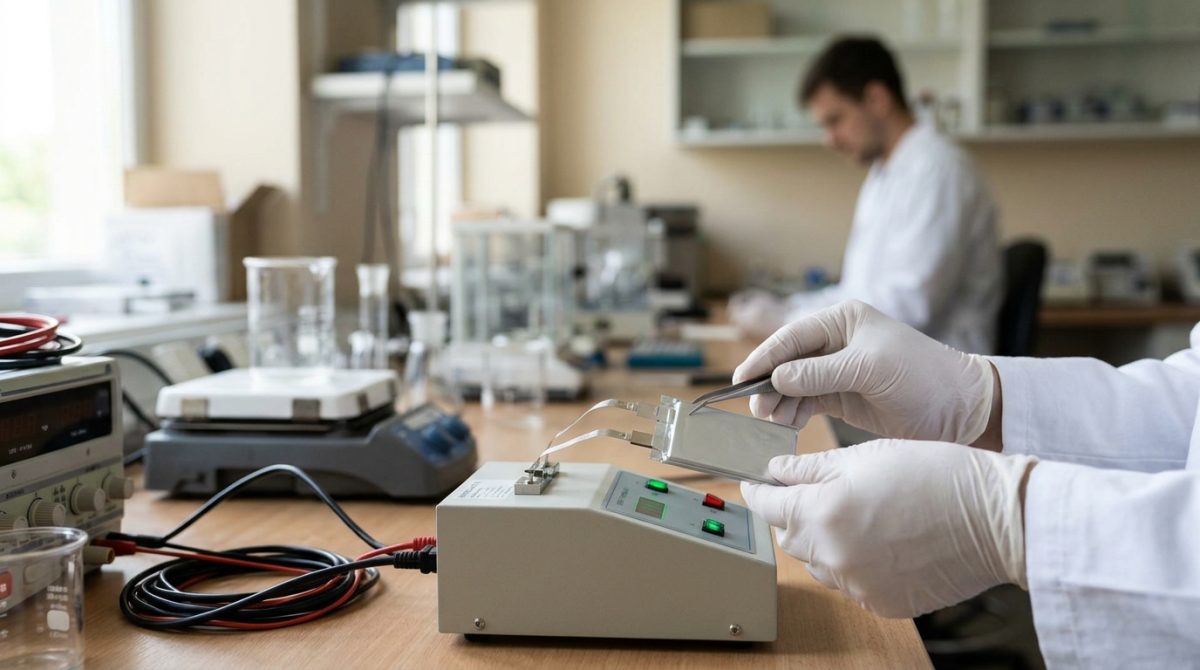
A research team at The Hong Kong University of Science and Technology (HKUST) has developed an anode-free lithium metal battery that achieves an energy density of 467 Wh/kg. By utilizing a silver-based additive, the researchers successfully improved battery stability and lifespan, addressing common issues such as uneven lithium deposition and the formation of needle-like dendrites that can compromise safety.
The study, published in the journal Nature Communications, demonstrates that a full coin cell using this design retains 90 percent of its capacity after 200 charge-discharge cycles. Anode-free batteries typically rely on a bare copper current collector rather than a traditional anode, which reduces inactive material. However, this configuration often struggles with lithium deposition problems. The new additive, referred to as AMI, modifies the copper surface to improve lithiophilicity, ensuring more uniform lithium distribution.
Beyond improving the surface, the additive triggers a reaction that forms a quasi-solid gel within the protective solid electrolyte interphase layers. This structure stabilizes the interface between the electrode and the electrolyte, facilitating more reversible lithium plating and stripping. According to Professor Shao Minhua, who led the research, the process integrates multiple functions—including current collector modification and the creation of a robust protective layer—into a single assembly step.
By simplifying the manufacturing process and enhancing the durability of the internal layers, this approach offers a potential pathway for developing lighter and longer-lasting energy storage solutions. The researchers noted that the integrated strategy effectively prevents the growth of dendrites, which are a primary cause of battery degradation and safety concerns in lithium metal systems.