Researchers Use Miniature Solar Cells To Guide Living Cell Alignment
A new wireless technique uses light-powered electrical fields to organize biological tissues without the need for bulky wired electrodes.

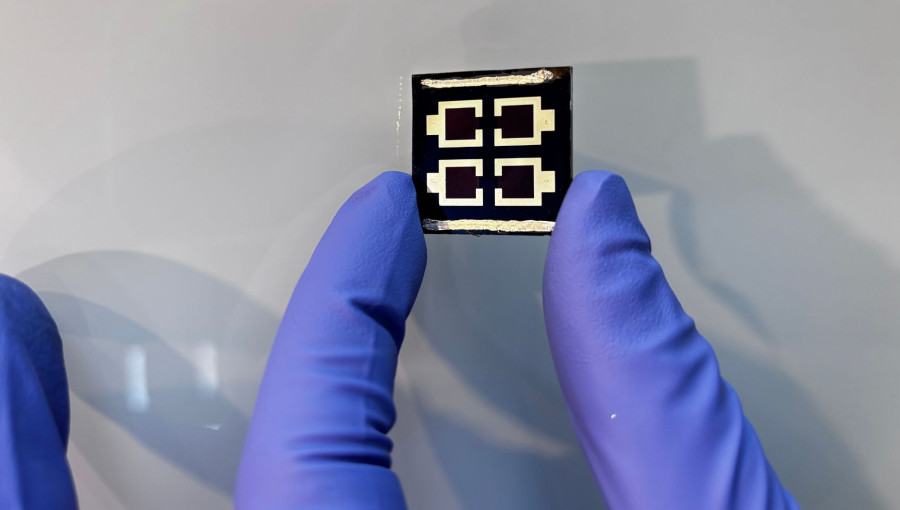
Researchers at Pennsylvania State University have developed a method to control the alignment of living cells using miniature photovoltaic cells. By patterning these tiny solar devices on silicon chips, the team generates localized electrical fields that influence cell orientation. This wireless approach offers a potential alternative to traditional, invasive electrical stimulation systems currently used in tissue engineering and bioprinting.
The study, published in Advanced Functional Materials, utilized arrays of silicon photovoltaic microcells to convert light into electrical signals. During experiments, the researchers placed human lung and skin fibroblasts on the chips and exposed them to varying light intensities over seven days. While cells grown without illumination showed random alignment, those exposed to light followed the specific patterns of the photovoltaic arrays.
The team found that they could manipulate the electrical fields by adjusting the size, spacing, and arrangement of the microcells, as well as by changing the intensity of the light. Individual photovoltaic cells used in the study ranged from 80 to 800 micrometers in diameter. Although cell-to-cell interactions still influence movement, the technique demonstrates that light-powered stimulation can effectively guide cellular behavior.
Future research will focus on testing the method on more sensitive cell types, such as cardiac and muscle cells, to determine if electrical stimulation can influence their specific functions. The researchers also aim to transition from flat surfaces to three-dimensional environments, which could allow for more precise organization of cells within developing tissues for regenerative medicine applications.