Spanish Firm Deploys Innovative Wave Energy Buoy System
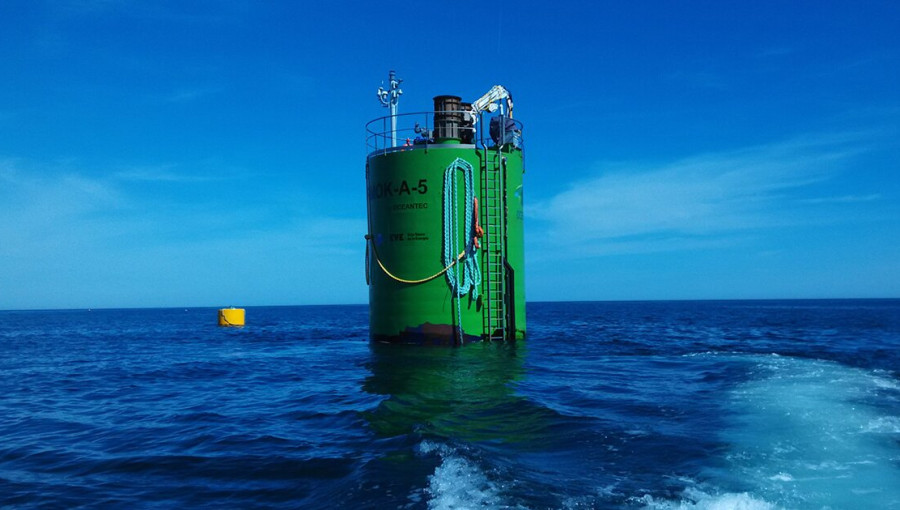
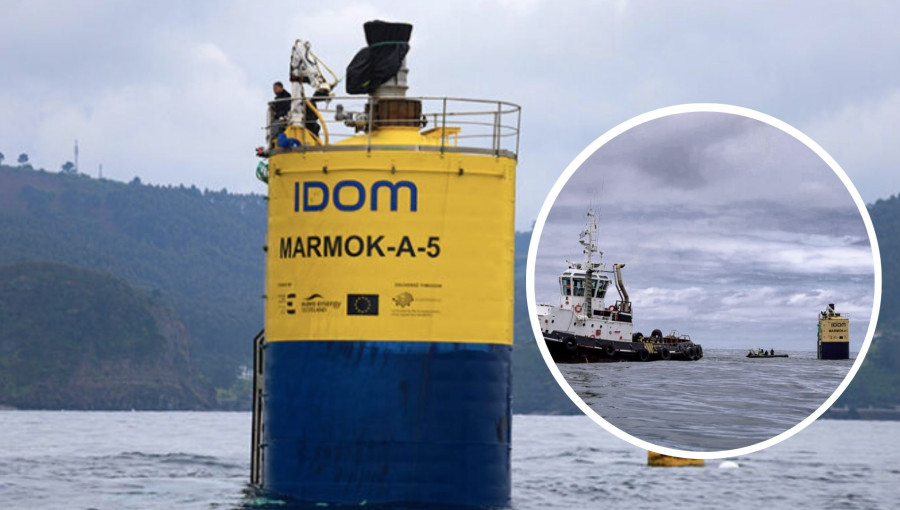
Spanish engineering firm IDOM has successfully deployed a massive floating buoy designed to harvest electricity from ocean waves. Located off the coast of Bizkaia, the 140-foot-tall structure, known as MARMOK-A-5, functions as a point absorber Oscillating Water Column. By utilizing wave motion to compress air and drive a turbine, the device generates power that is transmitted to the shore via subsea cables. This project, supported by the EuropeWave research initiative, serves as a critical trial to refine wave energy technology and demonstrate its potential for future commercial viability in challenging marine environments.
The MARMOK-A-5 stands as an impressive feat of maritime engineering, measuring 20 feet in diameter and anchored in waters nearly 300 feet deep. While only 20 feet of the structure remains visible above the surface, its internal column of water acts as a piston, forcing air through a turbine to create energy. At peak capacity, the unit produces approximately 30 kilowatts of electricity, sufficient to power roughly 15 to 20 average homes. This installation follows years of iterative testing, with previous versions proving their durability by surviving harsh winter conditions since 2016.
This latest deployment incorporates advanced features, including intelligent control systems, adjustable blades, and onboard battery storage. Project manager Borja de Miguel emphasized that achieving a secure grid connection at the Biscay Marine Energy Platform is a vital milestone in moving wave energy toward a commercial reality. The data collected during this operational phase will be instrumental in optimizing the technology for broader use. The project is part of a larger European effort, with the EU-wide R&D program committing €20 million to advance wave energy solutions.
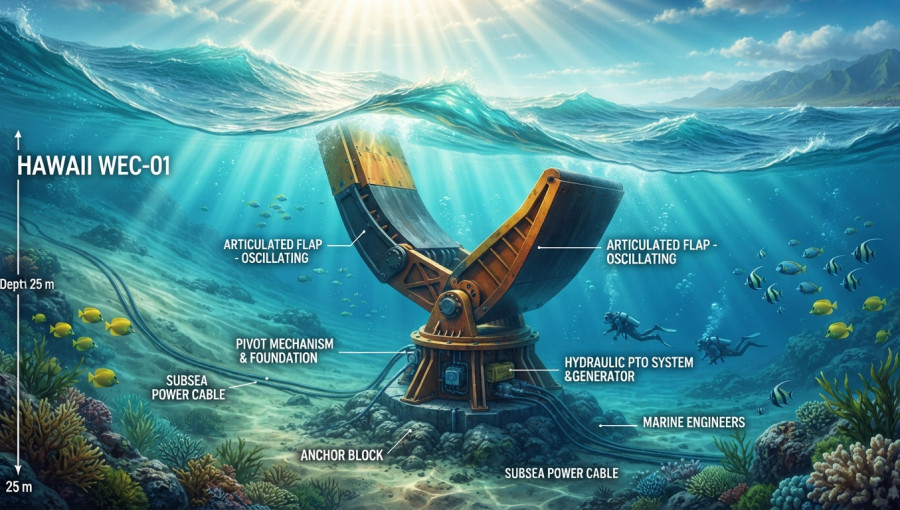
While the ocean represents a vast, untapped energy resource, the industry faces significant hurdles, including the need for cost-effective maintenance, long-term durability against extreme weather, and the protection of marine ecosystems. Despite these difficulties, global interest in wave energy converters remains high. Other recent developments include the testing of the OE-25 in Hawaii, experimental designs in Western Australia, and a large-scale agreement for a 50-megawatt installation in Barbados. As these various projects progress, they collectively aim to overcome the engineering challenges required to make wave power a reliable and scalable component of the global renewable energy landscape.