Tesla To Wind Down Cybertruck Production To Prioritize Cybercab Manufacturing
The electric vehicle manufacturer plans to repurpose its Texas Gigafactory capacity to scale production of its autonomous two-seat robotaxi by mid-2027.
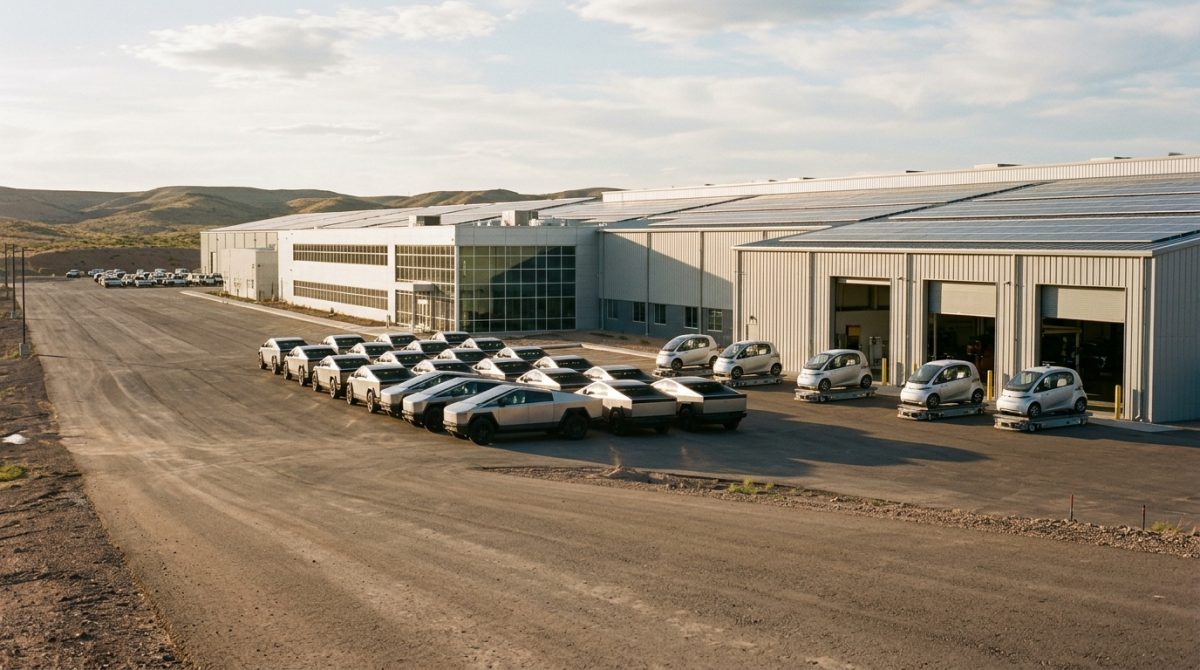
Tesla will begin winding down production of its stainless-steel Cybertruck at its Texas Gigafactory around mid-2027. The move, announced by CEO Elon Musk, aims to redirect manufacturing capacity toward the company's Cybercab, a two-seat autonomous robotaxi. This strategic shift reflects Tesla's increasing focus on autonomous transportation over its conventional electric vehicle models.
The decision follows a period of underwhelming sales for the Cybertruck, which struggled to reach the high volumes initially projected by Musk. According to estimates from Cox Automotive, Tesla sold 20,237 units in the United States in 2025, representing a 48% decline from the 38,965 units sold in 2024. The vehicle, which features an angular design, has also faced various quality-control challenges and recalls since its first customer deliveries in November 2023.
Tesla has not clarified whether Cybertruck production will be relocated to another facility or discontinued entirely. Musk noted that the existing fleet will remain in operation for a significant period. Meanwhile, the company is prioritizing the Cybercab, which was unveiled in October 2024. Designed without a steering wheel or pedals, the vehicle is intended for use in an autonomous ride-hailing service.
Tesla reported in its second-quarter 2026 update that it has already commenced production of the Cybercab and is currently testing the vehicles on public roads. However, the success of this transition depends on the company's ability to scale its autonomous driving operations and navigate regulatory requirements for driverless vehicle deployment. This pivot highlights a broader shift in Tesla’s corporate strategy, as it increasingly positions robotics and autonomous systems as central to its future business model.