UAVOS Solar Aircraft Reaches 47,600 Feet During Extended Endurance Flight Test
The ApusNeo solar-powered plane is targeting a 100-hour flight duration as part of testing for potential wildfire monitoring missions.
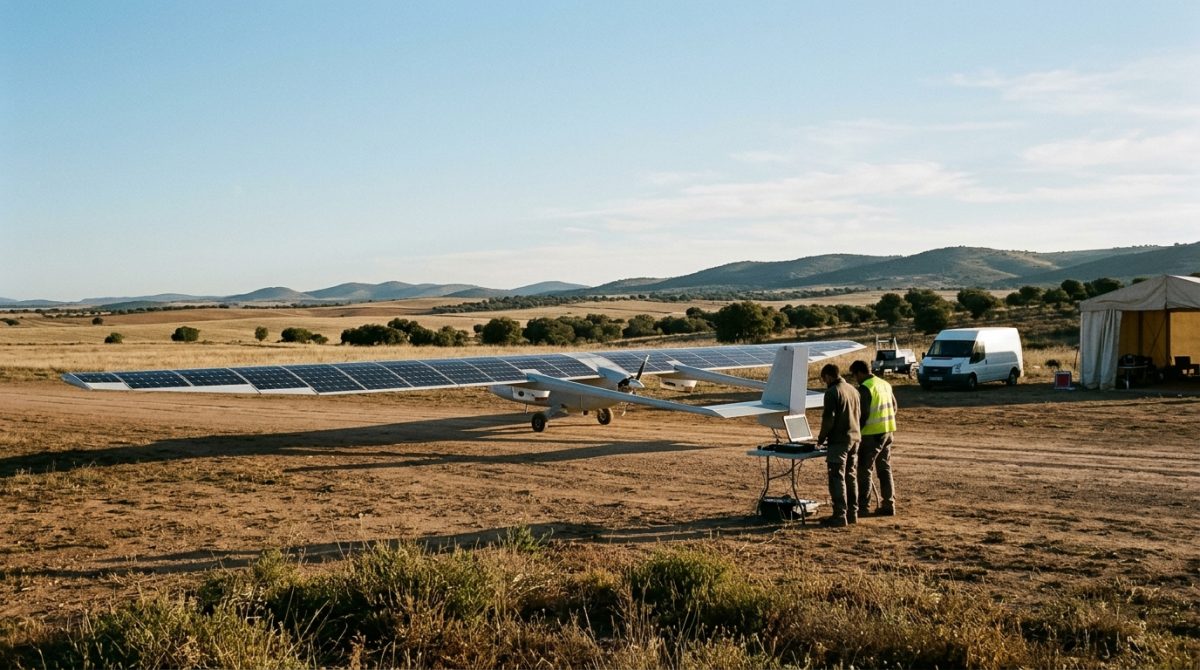
A solar-powered aircraft developed by UAVOS has completed a 29-hour flight over Fuerteventura, Spain, reaching an altitude of 47,600 ft (14,500 m). The ApusNeo, which features a 59-ft (18-m) wingspan, utilized stored solar energy to maintain flight through the night. The company aims to utilize the platform for wildfire detection, providing continuous monitoring capabilities that exceed those of satellites or traditional aircraft.
The October 16 flight launched from the Canarias Stratoport for HAPS & UAS at the Fuerteventura Technology Park. According to UAVOS founder and CEO Aliaksei Stratsilatau, the aircraft reached the altitude limit defined by notices to airmen coordinated by the Spanish air navigation manager ENAIRE. The aircraft is currently engaged in a subsequent flight with a target duration of 100 hours, having already logged over 80 hours while cruising at approximately 30,000 ft (9,100 m).
The ApusNeo operates by using wing-mounted solar panels to power its motors and charge onboard batteries during daylight hours, allowing it to remain airborne after sunset. The current model weighs up to 104 lb (47 kg) and can carry a 7.5 lb (3.4 kg) payload. During recent testing, the aircraft carried an Earth observation pod equipped with high-resolution cameras and infrared sensors to transmit real-time data to the ground.
While the International Telecommunication Union defines high-altitude platform stations as operating between 20 km and 50 km, the ApusNeo is currently testing its endurance and altitude capabilities. The project is supported by the Andalusian aerospace center (CATEC) and involves collaboration with Mira Aerospace, a subsidiary of the Abu Dhabi-based company Space42. Future missions will focus on integrating more advanced payloads to support emergency services and wildfire surveillance.