
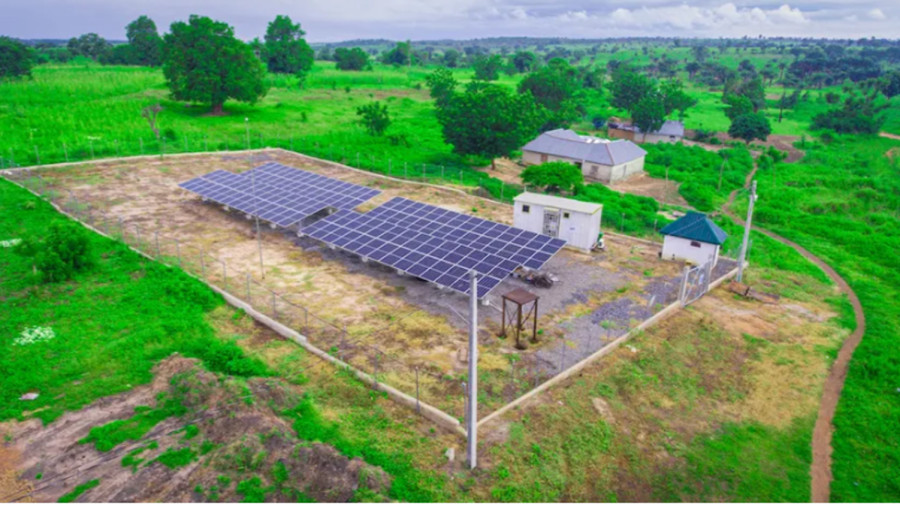
The recent advancements in solar energy and battery storage are significantly transforming energy landscapes in emerging economies, notably Pakistan. The affordability and accessibility of solar panels and battery systems are enabling individuals to become energy independent, leading to a shift away from traditional power grids. This change, while beneficial for many, is also creating challenges, as those who cannot afford these technologies may face higher energy costs. The critiques of the current energy system highlight the need for inclusive energy transition strategies to ensure that all segments of the population can benefit from renewable energy developments.
CleanTechnica has published hundreds of articles on renewable energy and battery storage, but we have not always thoroughly explored how those advances will alter societies that take advantage of them. Predicting the future accurately is impossible. If we could do so, there would be no need for sporting contests, as the result of games would be known in advance. But by paying close attention to small developments, we sometimes can get a glimpse of what the future might be. One of our regular readers — Bryan FW — recently posted a comment on a CleanTechnica article that seemed particularly insightful. He wrote: “The evolution here, once battery packs became cheap enough and ubiquitous enough, is that those consumers with the most resources will exit the grid first. Those remaining will become increasingly riskier as paying customers, creating either lower utility profits or government intervention where government increasingly subsidizes utilities until it becomes effectively the single payer for those remaining (except in libertarian states, of course, where people who can’t pay have to go back to the nineteenth century). “Either utility profits go away, or grid improvements halt. I think we can all guess which….The concept of moving electrons over great distance becomes obsolete. No more efficiencies of scale, no more fungible electricity markets, no more grand vision of harvesting the sun as it moves across the continent. “And that’s not necessarily a bad thing. With that decrease in efficiency comes a corresponding increase in redundancy. Ransomware or enemy action or natural disaster may take down microgrids here and there, but we just won’t be seeing these widespread failures that are so difficult and costly to deal with anymore. Globalization is the past; islanding is the future.” His words may be prescient.
There have been lots of headlines this week about how cheap solar panels imported from China have transformed life for many in Pakistan. Where previously the electricity provided by traditional power generators and distributed via a creaky energy grid was expensive and unreliable, now many Pakistanis are simply exiting the electricity market and taking responsibility for their own energy needs. A report by Energy Monitor dated August 20, 2025, says that Pakistan imported 17 GW of solar PV and an estimated 1.25 GWh of lithium-ion battery packs in 2024. The expectations are that by 2030, battery imports could increase to 8.75 GWh, which would be enough to meet over a quarter of peak demand. Solar by day, storage by night would become the new norm for the country. “The surge in solar and batteries is not only driving down energy costs for Pakistani users but also enhancing reliability and contributing to the country’s energy sovereignty by reducing dependence on imported fuels,” Energy Monitor says.
There are bumps in the road, however. The transformation “poses new challenges for grid resilience and system integration. The rapid growth of distributed energy is creating a divide between grid-dependent users and those who can afford off-grid solutions such as rooftop solar and batteries.” That is pretty much what Bryan FW predicted in his comment. Energy Monitor adds, “Pakistan’s energy transition underscores the need for utility-scale solar projects to complement rooftop and distributed systems, essential for meeting growing demand and facilitating the transition. Financing solutions must cater to all segments of the population to ensure that the rapid shift to solar and storage benefits the entire power system.” “Other emerging economies can draw valuable insights from Pakistan’s experience. Recommendations include making the energy transition inclusive, integrating distributed energy into the system,
https://cleantechnica.com/2025/08/25/solar-plus-battery-storage-this-changes-everything/