
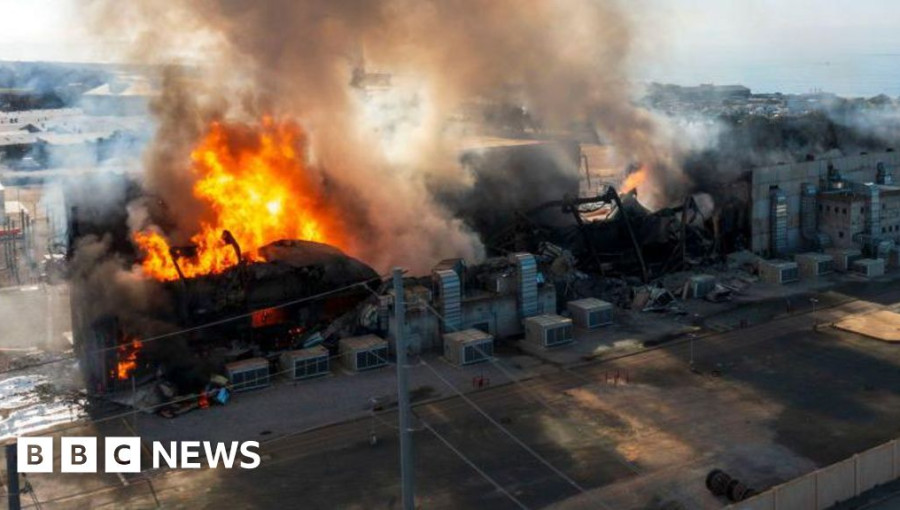
Robert Holden, a city councillor from Staten Island, has voiced serious concerns over the recent proposals to place battery energy storage systems (BESS) near residential areas and gas stations. These large-scale power storage facilities, which utilize lithium-ion batteries, are essential for harnessing renewable energy, but pose potential fire risks. A rising need for these systems is seen globally, with the European Union aiming to significantly increase battery storage. However, the technology has been plagued by incidents of fires, raising safety concerns that residents and experts have not overlooked.
Concerns over battery storage systems are growing, especially as proposals to install more facilities near homes and gas stations spark protests. Robert Holden, a city councillor, expressed alarm at the decisions to situate these energy storage facilities in such close proximity to residential areas in Staten Island, deeming it not only bad policy but dangerous. These battery energy storage systems rely on lithium-ion batteries, similar to those found in electric vehicles and electronics. As the world sees an increasing demand for renewable energy to achieve net-zero targets, the role of these storage facilities becomes critical to balance supply and demand, particularly in times of high electricity usage.
Driese Acke from SolarPower Europe emphasizes that to meet renewable energy goals, the European Union needs to increase battery deployment significantly from the current 75 gigawatt-hours to around 750 gigawatt-hours by 2030. However, experts like Professor Robert Dryfe highlight that while alternatives like cryogenic and hydro power storage exist, they remain relatively niche compared to electrochemical storage solutions provided by BESS. The pressing need for more storage is clear, yet the safety risks cannot be ignored.
The primary concern surrounding BESS technology is its vulnerability to fires, which can pose severe threats to communities. Previous incidents in the UK, including major fires that lasted over 24 hours, highlight the potential dangers of these facilities. These fires can result from thermal runaway, a phenomenon where various factors such as short circuits or manufacturing defects trigger excessive heat generation within the batteries, releasing flammable gases which can explode. The dense arrangement of batteries within BESS can further exacerbate the speed at which fires spread, creating significant hazards.
Community opposition to new BESS installations is also growing, as residents are apprehensive about safety and environmental impacts. Campaigners like Marguerite Fleming express frustration at the disregard for local communities regarding flood and fire risks associated with battery storage facilities. While companies like Blackford Renewables commit to addressing these concerns and promise engagement with the community, apprehensions remain prevalent among locals.
Professor Dryfe warns that the risks of fire are not limited to the operational BESS facilities; they also extend to battery recycling plants. Although recycling batteries is beneficial, dismantling them poses inherent risks and potential for fires during the process. Additionally, humanitarian and environmental issues related to the mining of materials required for battery production, notably cobalt, are hindering broader implementation of BESS technologies. In Germany, for instance, there is anxiety that the existing national grid may struggle with the influx of these facilities.
Experts call for enhanced and harmonized regulations across jurisdictions to address safety in BESS installations. A lack of uniform EU-wide standards complicates the efficient development of these systems; existing regulation is conducted at a national level, making it difficult to establish a cohesive single market for battery energy storage. Countries like China, the US, the UK, and Australia are actively working on guidelines for battery safety, although international standards remain elusive.
Advancements in battery technology continue to improve safety, with newer systems incorporating better fire suppression technologies and more resilient battery chemistries. Professor Dryfe insists that as society transitions toward renewable energy, developing reliable, large-scale energy storage solutions is becoming increasingly necessary for enhancing energy systems globally. There is a clear acknowledgment that despite the concerns, the shift toward renewable energy demands an upgrade in energy storage capabilities.