
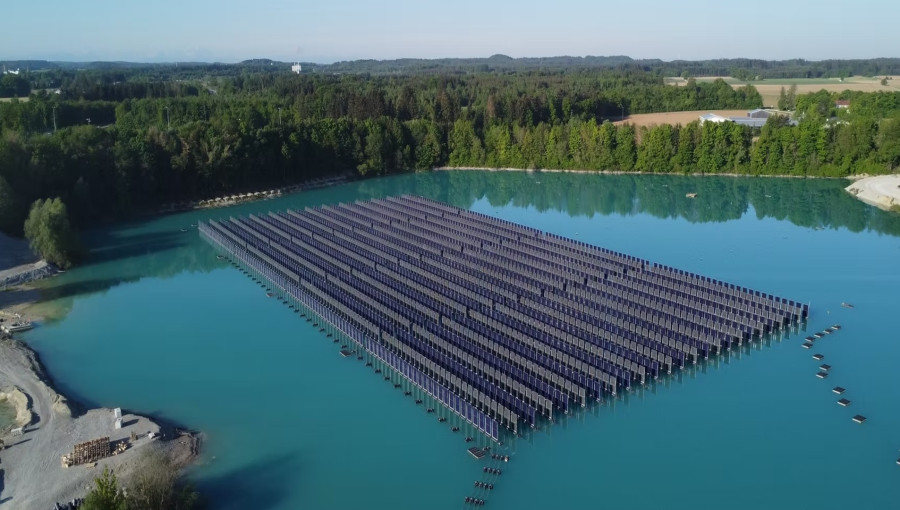
Germany has made a significant step in renewable energy with the commissioning of the world’s first vertical floating solar power plant by SINN Power. Situated at the Jais gravel pit in Bavaria, this innovative facility boasts an impressive installed capacity of 1.87 megawatts and is anticipated to generate around two gigawatt-hours of electricity annually. The project aims not only to provide clean energy for hundreds of households but also to minimize environmental impact by occupying only a small portion of the lake’s surface.
SINN Power’s unique system allows the solar panels to be positioned vertically, with gaps of open water measuring at least four meters between them, enhancing both light reflection and air circulation. This setup optimizes energy output throughout the day, particularly during morning and evening hours when conventional photovoltaic systems typically fall short. During its initial operation phase, the plant achieved a nearly 60 percent reduction in grid energy consumption, with potential efficiency improvements up to 70 percent as optimization continues.
The solar modules are anchored about 1.6 meters beneath the water surface on a keel-like structure, allowing for dynamic movement in response to wind and water level changes. The plant’s grid connection utilizes a floating cable and a shore-based feed-in point, ensuring energy transfer occurs without disrupting the aquatic ecosystem. Additionally, the design adheres to Germany’s Federal Water Resources Act, ensuring that surface coverage remains below the legal threshold. A second phase of the project in development will further extend its capacity while maintaining environmental integrity, as early assessments indicate positive ecological effects, including improved water quality and new habitats for fish and birds.
Prominent figures from both industry and government attended the plant’s inauguration, highlighting the initiative’s significance. The vertical solar system is particularly effective for artificial water bodies deeper than 1.6 meters and could serve high-consumption users as a stable source of grid-friendly energy. The technology shows great promise for future applications, including marine environments, further pushing the boundaries of sustainable energy solutions.