
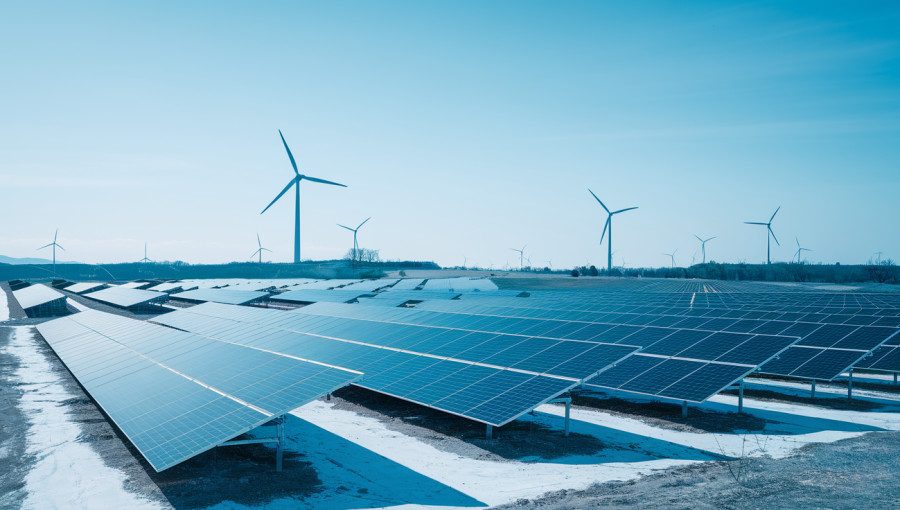
GlobalData predicts that Spain’s renewable energy capacity will soar to 218.1 GW by 2035, with solar power leading the charge, accounting for 152.8 GW of this increase. The analysis, detailed in the company’s “Spain Power Market Trends” report, indicates a compound annual growth rate (CAGR) of 9.1% from 2024 to 2035. The demand for renewable energy generation is expected to rise significantly, escalating from 131.2 TWh in 2024 to 313.6 TWh by 2035.
According to the report, solar energy capacity is anticipated to grow from 21.5 GW in 2021 to 152.8 GW by 2035. Onshore wind capacity is also poised for growth, climbing from 28.7 GW to 56.3 GW within the same timeframe. Mohammed Ziauddin, an energy analyst for GlobalData, noted that renewed policies, such as the Renewable Energy Economic Regime (REER) and the Climate Change and Energy Transition Law, are fostering investor confidence in the renewable sector. Additionally, new developments in offshore wind and green hydrogen are viewed as integral to future expansion, supported by EU and national financial initiatives.
The REER’s auction framework and incentives for distributed energy generation, particularly through the Self-Consumption Law, are expected to boost solar deployment across various scales, despite a pause on auctions since 2022. As for the projects exceeding 6,000 MW that won in previous auctions, many have opted to forgo their guarantees in favor of developing merchant-driven projects. However, challenges remain, as the Self-Consumption Law for rooftop solar remains unimplemented, with a Royal Decree to update it still pending publication, leading to a decline in rooftop installations.
Despite these hurdles, the report highlights that Spain’s clean energy approach benefits from reduced reliance on Russian gas and the diversification of LNG supplies. Enhanced interconnections with neighboring countries like France and Portugal aim to bolster supply security and grid flexibility. Nonetheless, Spain faces challenges including permitting delays, issues with grid management, and limited cross-border connections, which inhibit market efficiency.
Zia concluded that the rapid growth of solar PV, a robust pipeline of wind projects, and the expanding green hydrogen sector are crucial for long-term decarbonization goals. With improvements in grid infrastructure and interconnections, Spain is well-positioned to meet its 2030 and 2050 energy targets.