
US farmers are grappling with significant challenges this year, including tariffs, inflation, labor shortages, and environmental impacts, which have resulted in escalating rates of bankruptcy. In response to these difficulties, a novel agrivoltaic initiative in Virginia aims to marry solar energy production with agriculture, potentially providing essential support for farmers and local communities. This project exemplifies the emerging role of solar energy as a vital crop of the modern era.
The agrivoltaic project, located at Roundabout Meadows in Aldie, Virginia, has been recognized as “Plan of the Year” in the North American Agrivoltaics Awards. It covers only half an acre but is deemed strategically important as it strives to broaden the application of agrivoltaics from livestock grazing and pollinator habitats to food crop production. The initiative includes an energy storage system alongside installed solar panels that are already operational.
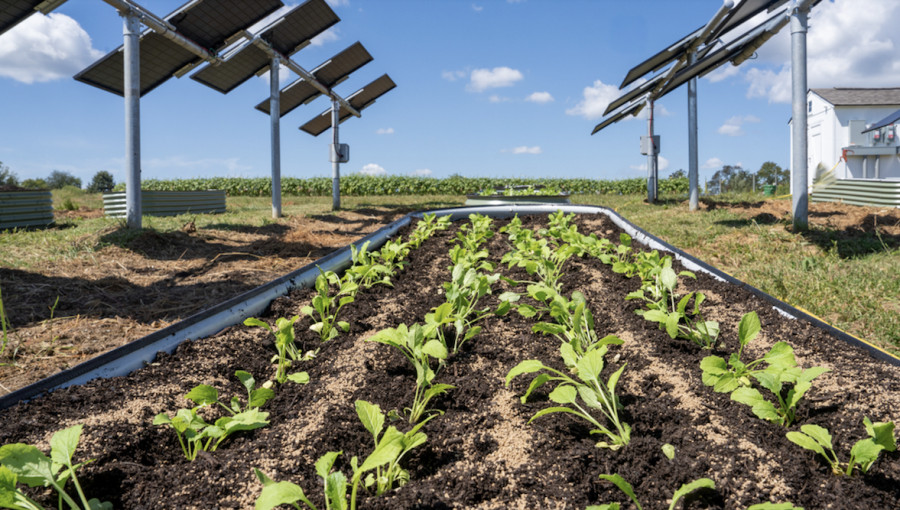
The Piedmont Environmental Council (PEC), which leads this project, has enabled various applications by integrating intelligent panels that monitor energy consumption and include battery storage for nighttime use. This setup allows essential farm operations, like refrigerators and pumps, to continue running on solar energy even when it’s dark. The design features a combination of vegetable rows below the solar panels, catering to both traditional farming and urban applications.
PEC emphasizes the overarching importance of agrivoltaic solutions for enhancing food security and energy production in Virginia, a state experiencing rising energy demands due to data center growth. If successful, the project will showcase how solar technology can coexist with agriculture on a small scale, featuring three rows of solar panels positioned to optimize sunlight for crops like lettuces and tomatoes.
The growth of the agrivoltaic movement in Virginia has been influenced by collaborative efforts among solar energy advocates, agricultural stakeholders, and conservationists. Technical support from national laboratories and previous experiences with other agrivoltaic efforts has further strengthened PEC’s initiative. Designed to generate surplus energy, the project holds the promise of transitioning from fossil fuel dependencies in farming operations.