
Researchers led by Purdue University have developed a sodium-ion battery that operates effectively in extreme cold, down to -100°C. This technological advance is a significant step forward for energy storage in harsh climates and space applications. The pouch cell battery, which uses abundant and sustainable sodium, was successfully paired with renewable energy sources like wind and solar power, proving its stability and potential for reliable off-grid power in frigid environments, from polar regions to deep-space missions.
The battery’s ability to function in freezing conditions is attributed to its carefully selected components. The design features an anode made of hard carbon and a cathode of sodium vanadium phosphate, Na₃V₂(PO₄)₃. These electrodes are separated by a polypropylene layer and housed in a flexible, polymer-coated aluminum pouch. A specialized electrolyte, which avoids freezing at low temperatures, is crucial to its performance. This combination of materials ensures the battery remains electrochemically active even when temperatures plummet.
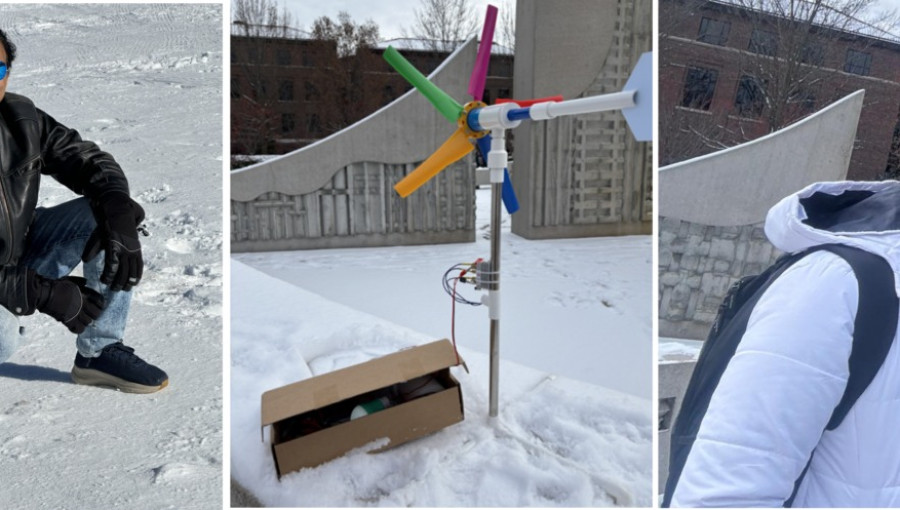
To verify the battery’s capabilities, the research team conducted a series of rigorous tests in a custom-built, liquid nitrogen-cooled system. Initial evaluations showed the cell delivered a specific energy of approximately 96 Wh/kg at a room temperature of 25°C, 74 Wh/kg at –25°C, and 46 Wh/kg at –50°C. In further experiments simulating real-world applications, the battery was connected to a small windmill generator and also tested outdoors in temperatures around –10°C, confirming its robust charging and discharging performance.
In a final, groundbreaking test, the sodium-ion battery was coupled with a polycrystalline silicon solar cell and operated at an ultra-low temperature of –100°C. Under these conditions, mimicking those found in space, the battery retained remarkable stability and delivered a specific energy of approximately 70 Wh/kg. Researchers noted that a key achievement was managing the interplay between the solar cell, whose efficiency increases in the cold, and the battery. The team is now exploring new combinations, such as pairing high-efficiency perovskite solar cells with other sustainable battery technologies for extreme environments.