
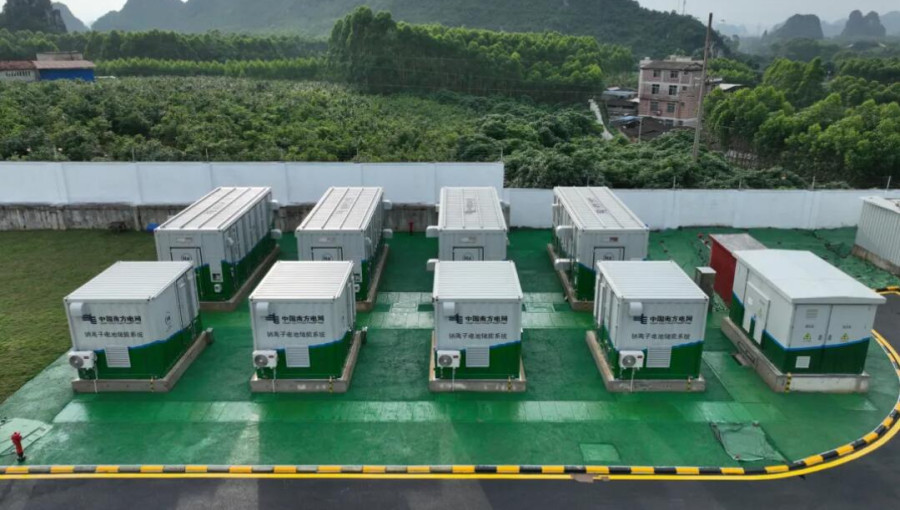
Guangde Qingna Technology Co., Ltd. has announced a major investment of CNY 6 billion ($835.98 million) to construct a 20 GWh sodium-ion battery production facility in China’s Sichuan Province. The new plant, located in the Suining Economic and Technological Development Zone, highlights the escalating shift towards sodium-ion technology as an alternative to the strained lithium-ion supply chain. This project is part of a broader industrial strategy positioning the Suining zone as a central hub for the entire sodium-ion ecosystem, aiming to meet the booming demand for energy storage solutions.
The formal agreement for the massive 20 GWh facility was signed on November 20. Once operational, the plant is expected to create significant synergies with other sodium-ion supply chain projects already established in the Suining Economic and Technological Development Zone. The region is rapidly emerging as a national focal point for the industry, attracting a cluster of substantial investments and specialized enterprises that are building a comprehensive industrial base for the technology.
This concentration of development is underscored by several other large-scale projects in the area. Wuhan Tian Na Technology is constructing an industrial base for sodium-ion anode material with a planned output of 130,000 tons per year. Meanwhile, SVOLT is developing an anode material project with a reported annual capacity of 1.3 million tonnes, positioning it as potentially one of the largest sodium-ion anode facilities in the world. Further investments include a 20,000 ton-per-year material plant from Suining Tian Na Energy and a 130,000 ton-per-year negative-electrode material project by Hive Energy.
The surge in sodium-ion investment comes as many lithium-ion battery producers struggle to keep pace with intense demand from the energy storage sector. Sodium-ion technology is increasingly viewed as a strong contender, promoted as a cheaper and more sustainable alternative due to the global abundance and low extraction costs of sodium. However, the technology still faces challenges before mass-market adoption, including its current production costs, which have yet to consistently undercut the rapidly scaling and cost-effective lithium iron phosphate (LFP) battery market.
China is at the forefront of this technological shift, leading in both development and deployment. Industry heavyweights such as CATL, BYD, EVE, and Huawei are driving innovation, while 100 MW-scale projects and hybrid systems combining sodium-ion and lithium-ion batteries are already being deployed. Market research projects that China’s sodium-ion battery market will grow from 10 GWh in 2025 to 292 GWh by 2034. By 2030, the nation is expected to account for over 90% of global sodium-ion battery production.
While recent data from the China Energy Storage Alliance (CESA) noted a decrease in planned production capacity for 2024 compared to 2023, investment in the sector appears to be recovering strongly. In the first nine months of this year, 37 new capacity construction projects were recorded, totaling 179.5 GWh. Although Guangde’s 20 GWh plant is a significant addition, it is surpassed by BYD’s 30 GWh per year sodium-ion battery factory in Xuzhou, which began construction earlier in 2024.