
The language of the text is English.
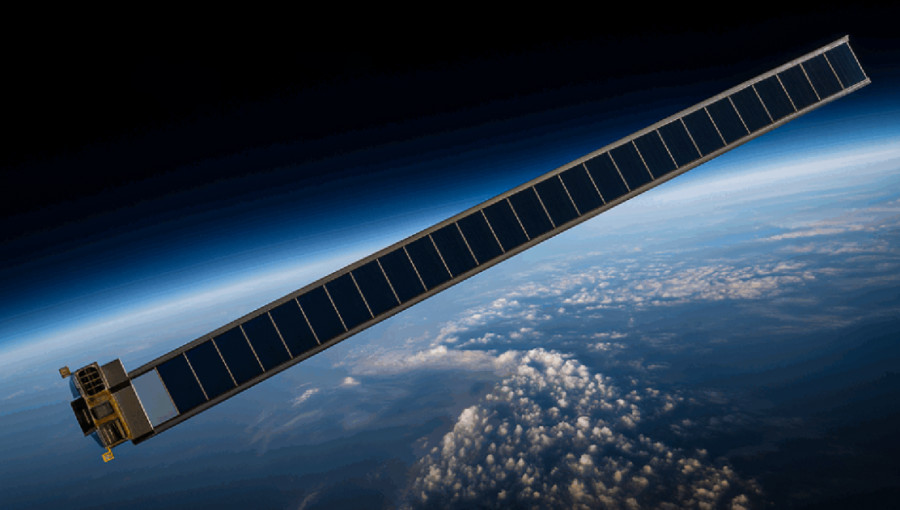
A new system designed to 3D print massive solar arrays directly in space could revolutionize how future spacecraft are powered. The German company Dcubed is developing the technology, named ARAQYS, to address the high costs and physical constraints associated with launching conventional solar panels. By manufacturing the power-generating structures in orbit, the company aims to significantly reduce launch weight and volume, paving the way for more ambitious and cost-effective missions as the commercial space sector continues its rapid expansion.
Current methods for powering spacecraft predominantly rely on solar panels that must be engineered to endure the extreme forces, vibrations, and acoustic stress of a rocket launch. This requires heavy and complex support and deployment mechanisms, which occupy valuable payload space and add substantial mass, thereby increasing overall mission costs. Dcubed’s innovative approach bypasses these challenges by launching the core components in a highly compact form and constructing the final array in the operational environment of space.
The ARAQYS system functions by first unspooling an ultrathin, flexible solar blanket. A specialized 3D printer then fabricates a rigid backing structure directly onto the membrane. The resin used in this process is instantly cured by the intense ultraviolet radiation of space, solidifying the structure without the need for additional equipment. The company projects that this in-orbit manufacturing technique will reduce the cost per kilowatt by orders of magnitude compared to traditional launch-and-deploy systems.
Dcubed has laid out a clear roadmap for validating its technology, beginning with a demonstration mission later this year to build a 60-centimeter (approximately 2-foot) boom. A more ambitious 1-meter (about 3.3-foot) version will follow, culminating in a 2-kilowatt operational demonstration in 2027, after which commercial products are expected to become available. Once mature, the technology could be applied to power-beaming arrays, space tugs, and large data processing constellations.
“Dcubed is fully committed to leading the next frontier: power generation in orbit,” said Dr. Thomas Sinn, the company’s CEO. He explained that his work on a NASA study over 15 years ago sparked the long-term project. “With ARAQYS, we’re now combining those years of innovation into affordable large-scale power solutions designed to meet the demands of the rapidly growing space economy.”