
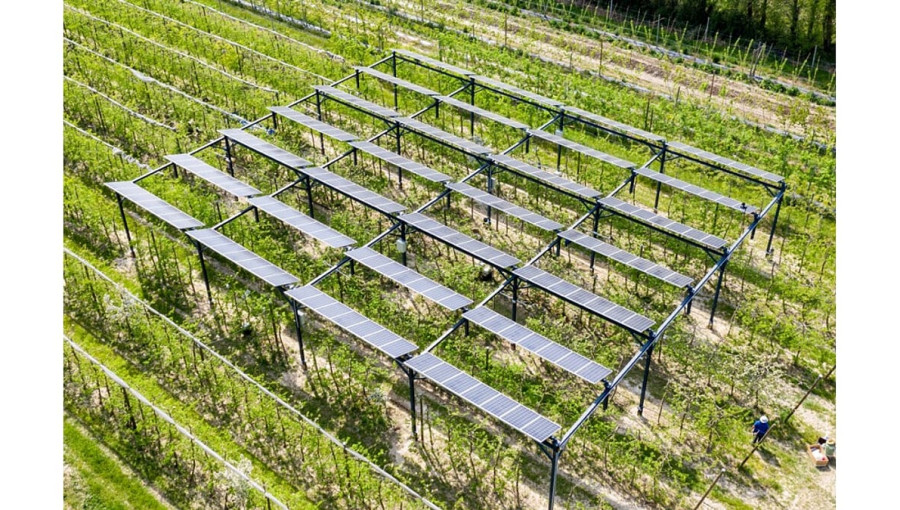
Greece is launching a new program to install 130 MW of agrivoltaic capacity, aiming to merge solar energy production with farming. The initiative will offer a EUR 65 per MWh tariff to support projects, which are capped at 200 kW each with a 10 MW limit per region. To qualify, solar panels must be installed over 2.1 meters high to permit cultivation below. However, an industry association has expressed concern that the proposed tariff may be too low to cover the higher costs of such installations, potentially hindering farmer participation and the program’s overall success.
The Greek government is set to promote the dual use of land for agriculture and energy through a new support scheme for 130 MW of agrivoltaic projects. This nationwide initiative will be managed with regional caps, limiting new capacity to 10 MW in each periphery. Individual projects will be restricted to a maximum output of 200 kW, encouraging smaller-scale deployment on active farms and greenhouses. The application process for grid connection is scheduled to open in February 2026.
Specific technical requirements are in place to ensure that agricultural production is not compromised. The regulations mandate that solar panels be mounted at a minimum height of 2.1 meters above the ground, or alternatively, they can be installed on the roofs of greenhouses. The framework also allows for the integration of battery storage systems. These batteries must provide at least one hour of storage capacity and can only be charged by the associated solar plant, preventing them from drawing power from the grid.
A key element of the program is a feed-in tariff set at EUR 65 per MWh. Despite this financial incentive, concerns have been raised about its adequacy. The Panhellenic Association of Agricultural Photovoltaics (PSAF) has cautioned that the elevated construction required for agrivoltaic systems leads to higher costs compared to traditional ground-mounted solar farms. The association warns that if the tariff is not perceived as sufficient by farmers, there will be a lack of investment, and the program may not achieve its intended goals.
The program is open to professional farmers as well as companies that have entered into agreements with the owners of cultivated fields. Each eligible applicant is permitted to develop a maximum of two agrivoltaic units. Once applications are submitted, the Hellenic Distribution Network Operator (HEDNO) will be responsible for reviewing and approving projects within a two-month timeframe, continuing until the 10 MW regional allocation is met.