
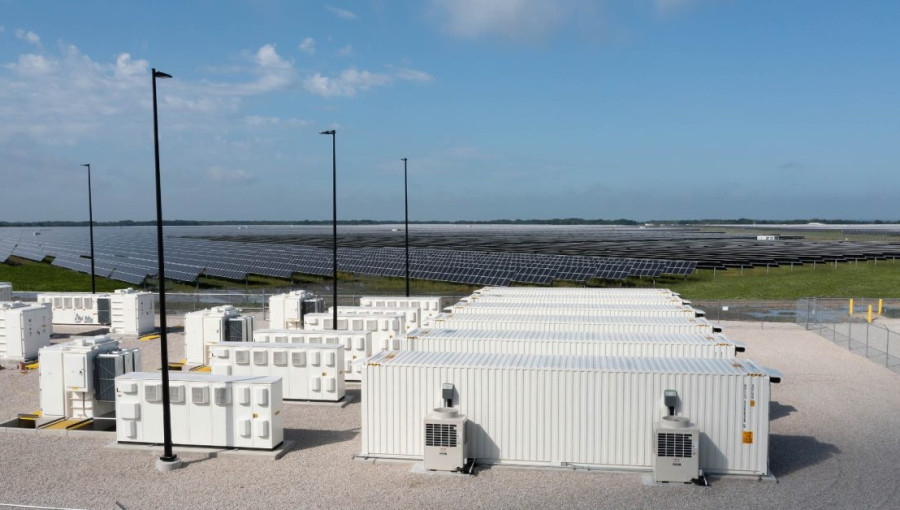
A new analysis indicates that the cost of large-scale battery storage has plummeted, reaching a pivotal economic threshold that makes solar power a viable 24-hour energy source. According to research from the energy think tank Ember, the levelized cost of storing energy has fallen to $65 per megawatt-hour in markets outside of China and the United States as of October 2025. This steep decline means that pairing solar panels with battery systems to deliver electricity after sunset is no longer a future prospect but a current economic reality.
The findings, based on recent energy auctions in Italy, Saudi Arabia, and India, show a continued sharp decline in costs throughout 2024 and 2025. Ember reports that the total installed cost for a grid-connected, utility-scale battery system designed for long-duration storage of four hours or more is now approximately $125 per kilowatt-hour. This figure is composed of about $75 per kilowatt-hour for the core battery equipment from China, with an additional $50 per kilowatt-hour covering installation and grid connection.
This significant cost reduction is not solely due to cheaper hardware. Other contributing factors include longer battery lifespans, improved operational efficiency, and lower financing costs. The establishment of clearer revenue models, such as government-backed auctions, has provided greater financial certainty for developers, further driving down the overall levelized cost of storage. These combined improvements have fundamentally reshaped the financial viability of energy storage projects.
The practical impact of this price drop is transformative for solar energy. Ember estimates that if half of the electricity generated by a solar farm during the day is stored for nighttime use, the $65 per megawatt-hour storage cost adds approximately $33 to the price of each megawatt-hour of solar power. With the global average price for solar electricity at $43 per megawatt-hour in 2024, the combined cost for dispatchable, on-demand solar power becomes about $76 per megawatt-hour, making it highly competitive with traditional power sources.
Kostantsa Rangelova, a global electricity analyst at Ember, described the new economics of battery storage as “unrecognizable” from just a few years ago, calling the development a “game-changer” for countries with high energy demand and abundant solar resources. This advancement allows solar to transition from an intermittent daytime power source to a reliable, dispatchable one. Furthermore, cheaper batteries enable energy arbitrage—charging when electricity is inexpensive and selling it back to the grid when prices are high. This helps stabilize the grid and reduces the need for costly and polluting fossil-fuel “peaker plants” that run only during periods of high demand.