
The language of the text is English.
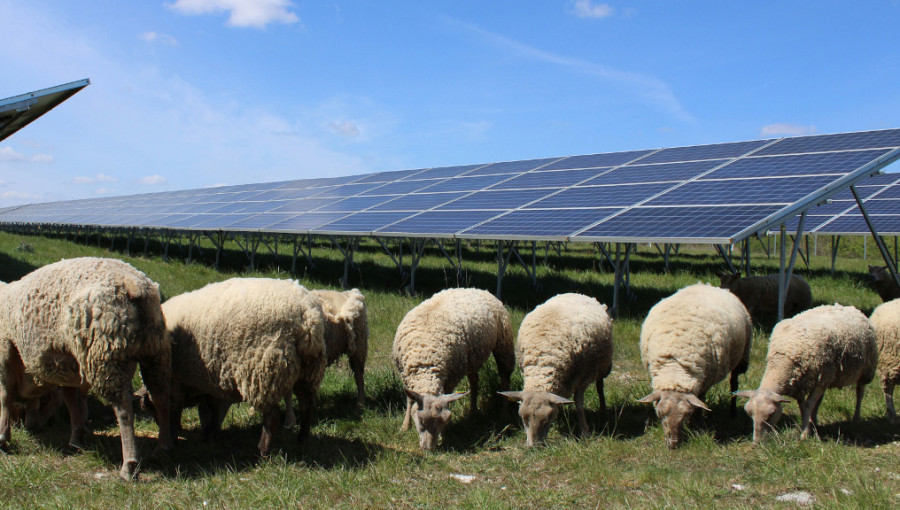
A new study highlights the significant financial advantages for farmers who integrate solar power generation with their agricultural activities. Research from the Boston Consulting Group and BayWa r.e. demonstrates that agrivoltaics can generate substantial long-term profits, providing the necessary capital for farmers to transition to more sustainable and regenerative practices. The analysis shows that the dual use of land for both food and energy production is a key enabler for a greener agricultural sector, with even small farms positioned to see a considerable boost in annual income.
A joint analysis by the Boston Consulting Group and agrivoltaic specialists at BayWa r.e. has concluded that the dual use of land for farming and solar energy can be a cornerstone in the shift toward regenerative agriculture. The study demonstrates that integrating photovoltaics not only enhances sustainability but also provides a crucial financial pathway for farmers to adopt these new methods. By examining the specific cash flows involved, the research confirms that solar installations can make the transition economically feasible for agricultural businesses.
The financial incentives are compelling across different scales of operation. According to the report’s projections, a medium-sized farm could see its annual profits increase by €55,000 to €75,000 in the long run. Smaller farms are also poised to benefit, with potential long-term profit gains estimated between €15,000 and €17,000 annually. While initial returns are tempered by the necessary investment costs, the analysts project that profits will grow significantly in subsequent years as the systems become established.
To reach these conclusions, the researchers modeled three distinct farm types in Germany. The analysis included a small farm with 25 hectares of arable land and 25 hectares of grassland, a medium-sized operation with 200 hectares of cropland and 100 hectares of grassland, and a large arable farm managing 1,000 hectares. This approach allowed for a detailed examination of how agrivoltaics could be implemented in various agricultural contexts.
The study also explored various business models for leveraging the solar power generated. Self-consumption of electricity is a viable option for all farm sizes, though it is often most practical for smaller operations. For broader market participation, feed-in tariffs and market bonuses present opportunities for farms of any scale. Meanwhile, direct Power Purchase Agreements (PPAs) are identified as a particularly attractive model for large agricultural enterprises looking to sell their energy directly to corporate buyers.