
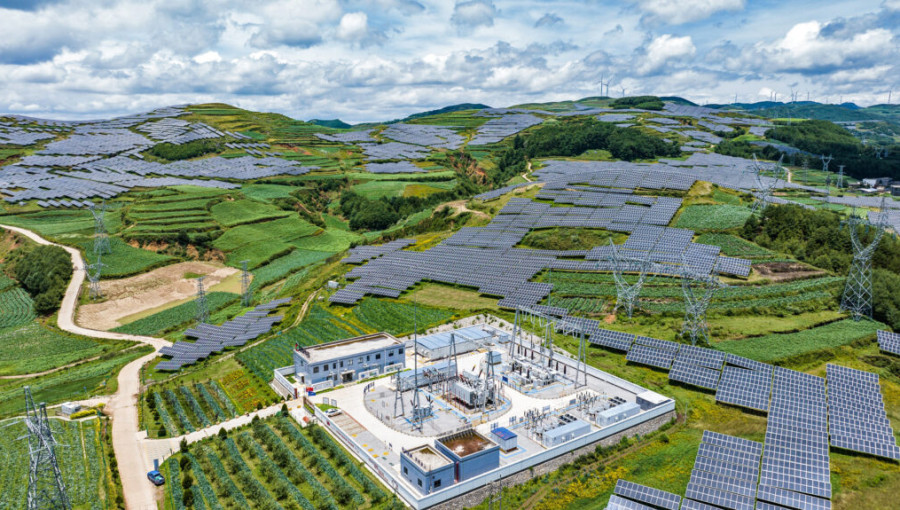
Solar energy is rapidly ascending to a dominant position in the global energy landscape, driven by unprecedented manufacturing expansion and plummeting costs. A major new study involving over 60 international researchers projects that global solar capacity could reach 75 terawatts by 2050, a massive leap from the current 2 terawatts. While technological advancements continue to push solar module efficiency toward 35 percent, a growing policy divide has emerged. As global markets and major corporations accelerate their transition, current U.S. policy shifts toward fossil fuels risk leaving the nation behind in the renewable race.
The global expansion of photovoltaics has outpaced every other energy technology in history regarding both price reduction and manufacturing scaling. According to a recent paper published in Nature Energy, which included contributors from the Fraunhofer Institute for Solar Energy Systems and the National Laboratory of the Rockies, the world is on a transformational trajectory. Current data shows that global solar capacity has already doubled since 2022, reaching the 2-terawatt milestone.
The success of solar power is largely attributed to the fact that the primary fuel source—sunlight—is both free and inexhaustible. Experts note that the Earth receives enough solar radiation in a single hour to power global operations for an entire year. As solar panel efficiency moves from the current 30 percent toward a projected 35 percent by mid-century, projects will require less land and fewer materials to generate the same amount of electricity, further driving down costs.
However, this transition presents significant infrastructure challenges. To manage a grid dominated by solar energy, planners must integrate diverse power plants and advanced energy-storage technologies to ensure reliability during the night and periods of low generation. Despite these technical hurdles, solar is already the most affordable energy source in the majority of the world, with no fundamental resource limits hindering its continued advancement.
A significant geopolitical shift is also underway. While renewable energy now accounts for 32 percent of global electricity generation, the United States has recently pivoted toward a policy of “energy dominance” centered on coal, oil, and natural gas. This includes the removal of tax incentives for solar energy and electric vehicles. Analysts warn that such moves may not stop the global momentum of solar power but could instead allow other nations, particularly China, to solidify their roles as the sole leaders in the high-tech energy market.
The broader energy transition remains resilient despite political fluctuations in North America. In 2025, global electric vehicle sales rose by 20 percent, reaching 20.7 million units, with China and Europe seeing significant gains while the U.S. market experienced a slight decline. Simultaneously, the U.S. legal system has seen developers successfully challenge federal stop-work orders on offshore wind projects, and major tech firms like Meta are diversifying their portfolios with significant investments in nuclear and solar energy to power the next generation of data centers.