
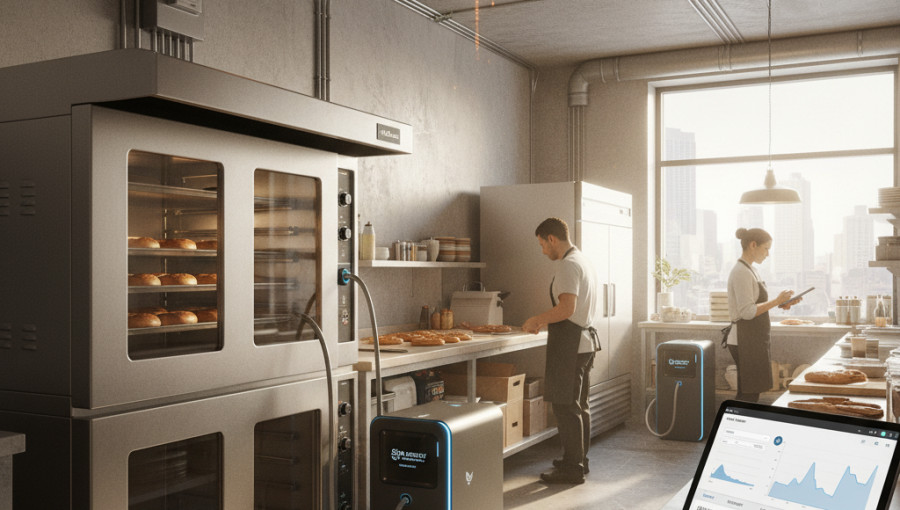
A Brooklyn-based bagel chain, Black Seed Bagels, is implementing a novel energy-saving strategy by utilizing plug-in batteries to power industrial kitchen equipment. In partnership with the startup David Energy, the shop uses portable 2.8-kilowatt-hour units to run meat-cooking ovens and refrigerators, effectively bypassing New York City’s complex electrical and fire regulations for permanent installations. By shifting power consumption away from the grid during peak times, the business aims to significantly reduce high demand charges that often constitute half of its monthly utility costs, providing a scalable model for small businesses facing rising electricity prices.
In the bustling kitchen of Black Seed Bagels’ Bushwick location, a high-capacity electric oven known as the “Baconator” prepares thousands of pounds of meat weekly. To manage the energy required for such heavy operations, the oven is connected to a battery roughly the size of a carry-on suitcase. This unit, along with two others dedicated to energy-intensive refrigerators, allows the shop to draw power from stored energy rather than the municipal grid during the busiest morning hours.
The initiative is part of a pilot program led by David Energy, a New York retail energy provider that supplied the hardware at no initial cost. Using a specialized software platform, the startup dictates exactly when these appliances switch to battery power. This strategy is specifically designed to combat “demand charges”—fees levied by utilities like Con Edison based on a customer’s maximum power draw during any 15-minute window in a month. For many New York City businesses, these peak-use fees represent between 15% and 50% of their total electricity bill.
By shaving down these spikes in consumption, Black Seed Bagels hope to see significant cumulative savings. Co-owner Noah Bernamoff noted that even modest monthly savings of $80 per store could result in nearly $10,000 in annual avoided costs across the company’s 10 locations. The “do-it-yourself” nature of the setup is a key advantage; unlike permanent battery systems that face rigorous fire safety inspections and lengthy utility interconnection processes in New York, these plug-in units can be deployed almost instantly.
David Energy has already expanded this model to approximately 50 locations, including fast-food outlets, spas, and dog grooming businesses. The collective storage capacity of these sites now exceeds 500 kilowatt-hours. James McGinniss, CEO of David Energy, views these portable systems as a way to rapidly scale energy storage without waiting for regulatory shifts. The company intends to use this distributed network to participate in demand-response programs, which pay users to reduce grid strain during heatwaves or other high-stress periods.
The long-term vision for the program involves creating a “virtual power plant” effect, where a portfolio of small-scale batteries can be managed to optimize wholesale energy purchases. For business owners like Bernamoff, the technology offers a bridge toward future electrification. As New York pushes for buildings to transition away from fossil-gas appliances toward electric alternatives, integrated battery storage will become essential for managing the resulting increase in electricity demand and maintaining a stable local grid.