
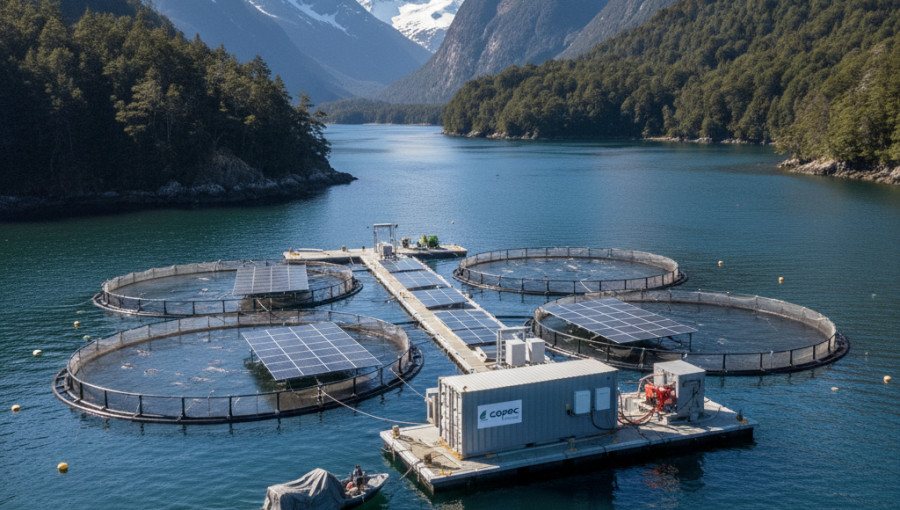
A pioneering hybrid solar and storage project has been launched at the Quintupeu salmon farm in Chile’s remote Los Lagos Region to reduce dependence on fossil fuels. Developed through a partnership between Copec, Luxmeter Energy, and Ventisqueros, the installation integrates a 48 kW photovoltaic plant with a 109 kWh battery storage system. This off-grid solution is specifically designed to withstand harsh marine conditions while providing a reliable power supply for critical aquaculture operations, marking a significant step toward decarbonizing isolated industrial facilities in southern Chile.
Located in the Hornopirén area, the Quintupeu facility operates entirely off-grid, traditionally relying on diesel generators for its energy-intensive processes. The new system utilizes flexible solar panels mounted on specialized structures tailored for the limited space available at maritime aquaculture centers. This innovative design allows the farm to generate clean energy on small, exposed surfaces where standard solar panels would be unsuitable due to environmental and spatial constraints.
The 48 kW solar installation is paired with a 109 kWh battery energy storage system (BESS), which captures energy during peak sunlight hours for use throughout the day and night. The existing diesel infrastructure remains on-site, but its role has transitioned to a backup capacity, only activating during prolonged periods of low solar generation or unforeseen operational emergencies.
Initial performance data from the system’s first full month of operation highlights its immediate impact. The solar-plus-storage setup successfully met approximately 66% of the energy requirements for the facility’s photoperiod control system—a critical process that regulates light cycles to manage the biological development of the salmon. During this pilot period in October, the farm operated for nine full days without requiring any diesel generation, significantly reducing the frequency and logistical burden of fuel deliveries to the remote fjord location.
Beyond light regulation, the renewable energy system supports essential functions including water oxygenation, automated feeding, and real-time monitoring. By integrating these advanced solar solutions, the project developers aim to provide a blueprint for other isolated aquaculture operations looking to mitigate their environmental footprint and streamline operational costs in challenging geographical settings.