
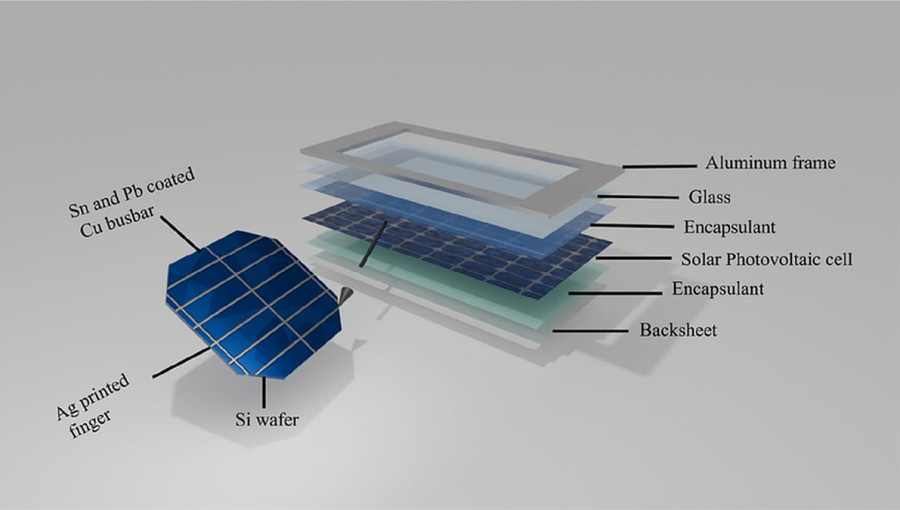
As global solar capacity is projected to reach 4.5 TW by mid-century, the industry faces a looming waste crisis with an estimated 60 million tons of end-of-life solar module material. A recent comprehensive review highlights the transition from basic mechanical recycling to advanced hybrid systems. These innovative approaches aim to maximize the recovery of high-value components, particularly silver and high-purity silicon, while meeting strict international environmental regulations. By optimizing recovery processes, the sector is turning a significant waste management challenge into a viable circular economy opportunity.
The rapid scaling of photovoltaic installations worldwide is creating a massive secondary stream of decommissioned hardware. To address this, the industry is evaluating various recycling pathways for crystalline silicon (c-Si) modules, the dominant technology in the market. Currently, mechanical recycling is the most prevalent method, effectively reclaiming between 80% and 90% of bulk materials like glass and aluminum. However, this approach often leads to material contamination, which complicates the extraction of high-purity silicon and precious metals.
Alternative methods, such as thermal and chemical processing, offer higher precision but face their own hurdles. Thermal recycling can yield silicon with 99.9999% purity and recover over 90% of silver, yet it requires significant energy inputs, with processing temperatures often exceeding 500°C. Meanwhile, chemical recycling provides excellent selectivity for silver and the removal of ethylene vinyl acetate (EVA) layers, but the use of hazardous solvents and slow processing speeds currently hinder its widespread industrial adoption.
To overcome these limitations, researchers and industry leaders are increasingly focusing on hybrid recycling models. By integrating mechanical pretreatment with specialized thermal or chemical stages, these systems can exceed the recovery and reuse targets established by the EU WEEE Directive. Such integrated processes are designed to handle the complexity of modern solar module construction, where valuable materials are often encapsulated in protective plastic layers.
The economic potential of these recycling efforts is significant. Current estimates suggest that reclaimed materials could generate between $11 and $12 per solar module. While glass and aluminum represent roughly 65% of a module’s total weight, silver is the primary value driver. Despite making up less than 0.5% of the mass, silver accounts for more than 45% of the total recoverable value.
As the volume of decommissioned panels is expected to spike toward 2030, the development of cost-effective, industrial-scale recycling is becoming a priority. Experts suggest that optimizing these hybrid routes will be essential for maintaining the sustainability of the solar industry, ensuring that the transition to renewable energy remains a truly closed-loop process.