
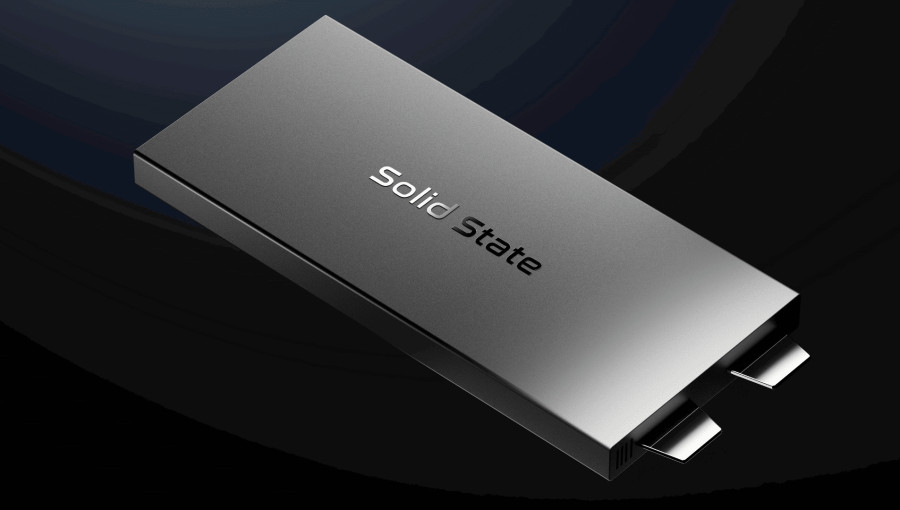
Samsung SDI recently showcased its latest energy solutions at InterBattery 2026 in Seoul, focusing on the synergy between artificial intelligence and advanced battery technology. The company introduced a new pouch-type all-solid-state battery specifically designed to power humanoid robots and wearable devices. By prioritizing high energy density and a lightweight form factor, Samsung aims to address the spatial and mechanical constraints of modern robotics. This innovation, alongside new data center power systems and predictive software, highlights the company’s commitment to supporting the infrastructure of the AI era.
Under the banner “AI thinks, Battery enables,” Samsung SDI is pivoting from traditional automotive power toward the burgeoning field of “physical AI.” The centerpiece of their exhibition is the pouch-type all-solid-state battery. Solid-state technology is widely considered the next frontier in energy storage due to its superior safety profile and increased power capacity compared to liquid electrolyte alternatives. For humanoid robots, which require significant power for complex limb movements while maintaining a slim profile, these lightweight pouch batteries offer a compact solution that maximizes performance without adding unnecessary bulk.
Beyond robotics, Samsung is targeting the growing energy demands of AI-driven data centers. The company unveiled the U8A1 battery, an Uninterruptible Power Supply (UPS) solution that improves space efficiency by 33% over previous generations. As data centers strive to maximize server density, such compact energy storage becomes vital for operational scaling. Complementing this hardware is the “Samsung Battery Intelligence” (SBI) software. This platform monitors battery health across more than 1,400 global sites, utilizing historical data to predict potential failures and ensure operational continuity before issues arise.
To address the broader challenge of grid stability, Samsung SDI also presented the SBB 1.5. This large-scale energy storage system is housed within a 6.1-meter shipping container and contains tens of thousands of individual battery cells. As the energy consumption of AI industries continues to surge, these high-capacity storage units are designed to mitigate grid fluctuations and ensure a steady power supply. Company representatives emphasized that their goal is to provide premium, specialized battery solutions that unlock the full potential of AI-driven industries through decades of engineering expertise.