
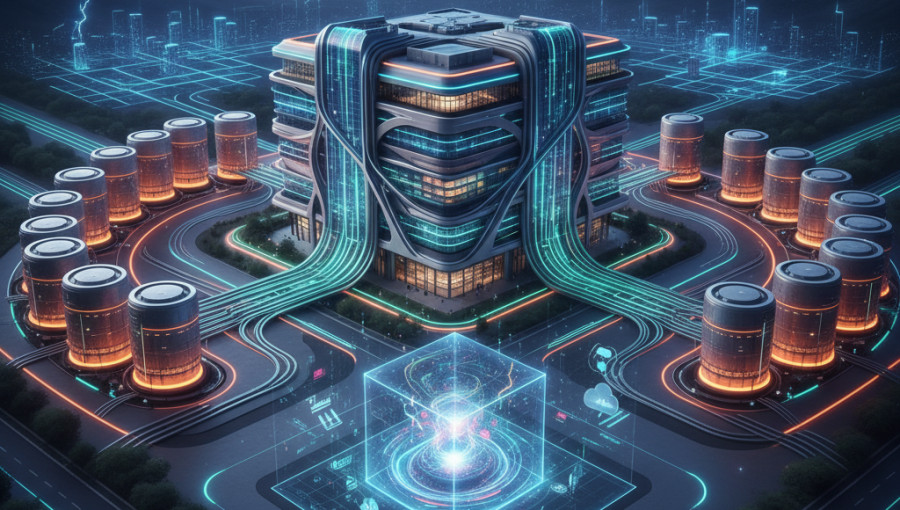
A new generation of data centers is emerging to address the growing strain on power grids caused by the global digital boom. Startup Verrus has developed a reciprocal energy model that allows these facilities to support local utilities rather than merely consuming resources. By utilizing utility-scale batteries and advanced optimization software, these centers can stabilize the grid during peak demand. Recent validation at the National Laboratory of the Rockies (NLR) confirms that this design is ready for deployment, potentially shortening the decade-long wait times currently facing new grid connections.
For years, the rapid expansion of digital infrastructure has outpaced the capacity of the U.S. electrical grid. Many newly constructed data centers sit idle for years because utilities cannot provide the massive power loads required for modern computing. In some regions, the backlog for a grid connection now stretches to ten years. This disconnect has strained the relationship between technology firms and energy providers, as traditional data centers often function as a one-way drain on local resources and community power supplies.
Verrus aims to transform this dynamic through a design that treats the data center as a grid asset. Unlike traditional facilities that rely on diesel generators for emergency backup, Verrus centers utilize utility-scale batteries. These systems allow the facility to switch instantly from the grid to stored energy when demand spikes, helping to prevent outages in the surrounding community. This “give-and-take” approach not only enhances operational stability but also makes these facilities more attractive to utilities, which may lead to faster approval for grid access.
Beyond its battery capabilities, the company has reimagined the internal power distribution of the data center. Using what it describes as an “energy highway,” the system moves electricity more efficiently than traditional networks. This distribution is managed by a specialized optimization platform—an “electric brain”—that makes split-second decisions to balance performance with energy conservation. This efficiency is critical for handling the massive computational demands of artificial intelligence, healthcare data, and essential digital services.
To ensure the reliability of this complex system, Verrus partnered with the National Laboratory of the Rockies to use its Advanced Research on Integrated Energy Systems (ARIES) platform. ARIES provides a sophisticated virtual environment where researchers can stress-test technology against thousands of real-world scenarios, including severe storm systems and grid disruptions. By simulating millions of potential situations, the platform identified and resolved software errors in just two days—a process that would normally take months of traditional testing.
This collaborative testing has proven that the Verrus model is ready for real-world application. By moving away from the self-protection model of generator-backed facilities toward a community-protection model, these flexible data centers offer a sustainable path forward for the industry. As the U.S. Department of Energy continues to refine tools like ARIES, the ability to predict and prevent grid failures becomes more attainable, paving the way for a more resilient and integrated digital infrastructure.