
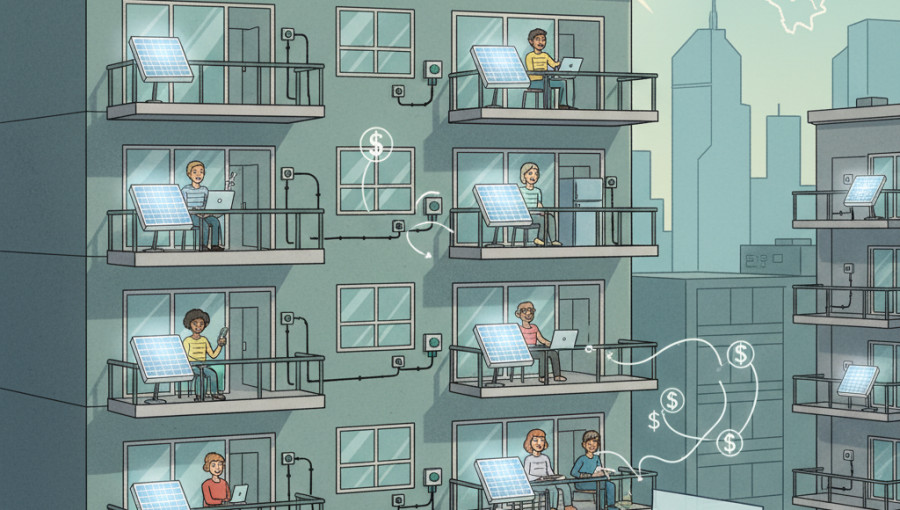
Illinois is advancing legislation to simplify the installation of “balcony solar” systems, following similar moves in Utah and Virginia. The proposed bill, which recently cleared a key Senate committee, aims to remove bureaucratic hurdles and fees for small plug-in solar arrays up to 1,200 watts. By mandating utility cooperation and preventing homeowner associations from blocking smaller units, the measure seeks to expand clean energy access for renters and homeowners alike. Proponents argue the initiative will lower energy bills and support state climate goals while ensuring safety through mandatory equipment certification.
The Illinois state legislature is moving toward a significant shift in residential energy policy with a bill designed to streamline the adoption of plug-in solar technology. On March 12, the Senate Energy and Public Utilities Committee approved the measure, which is now headed for a full Senate hearing alongside parallel considerations in the House. With Democrats controlling both chambers and Governor JB Pritzker’s administration generally supportive of renewable initiatives, advocates are optimistic the bill will be signed into law before the legislative session concludes in May.
The proposed law focuses on “balcony solar”—small, off-the-shelf solar panel systems that can be plugged directly into standard wall outlets. Under the new regulations, utilities would be required to permit systems with a capacity of up to 1,200 watts without demanding complex interconnection agreements or charging administrative fees. Such a setup is capable of powering essential household appliances, including a refrigerator, potentially saving families up to $400 annually. Currently, these systems cost approximately $3 per watt, but experts anticipate prices will drop as more states adopt similar frameworks and the market scales.
A unique provision in the Illinois bill targets common barriers for renters and condominium owners. The legislation would prohibit landlords and homeowners’ associations from imposing restrictive rules, fees, or insurance mandates on solar module arrays of 391 watts or less. This protection ensures that residents who do not own their rooftops can still participate in the transition to clean energy.
While the momentum for plug-in solar is growing nationwide—with Utah and Virginia recently passing their own versions—the technology has faced pushback from some utility companies. Concerns often center on “islanding,” where solar panels continue to feed electricity into the grid during a power outage, potentially endangering utility workers. To address this, the Illinois bill requires all systems to be certified by UL Solutions or similar organizations, ensuring they automatically shut down during grid failures. Modern microinverter technology, standard in most commercial units, already includes these safety features.
The push for affordable energy comes as Illinois residents face rising electricity costs, driven by extreme weather events and the massive energy demands of new data centers. Advocates argue that plug-in solar provides a low-barrier entry point for those unable to afford or install traditional rooftop solar. While Germany has already seen over a million households adopt these systems, the United States is only beginning to tap into this resource. Supporters believe that by removing the “regulatory gray area,” the state can empower consumers to take control of their energy consumption while contributing to broader carbon reduction targets.
