
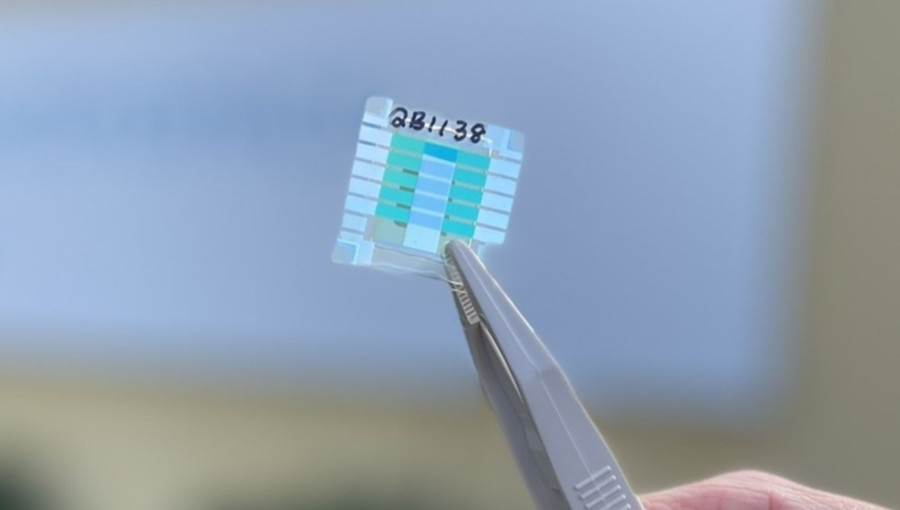
Researchers from the University of Melbourne, RMIT University, and Australia’s national science agency, CSIRO, have successfully developed a prototype for the world’s first quantum battery. This groundbreaking device utilizes quantum properties like entanglement to achieve a feat impossible for conventional chemical batteries: it charges faster as it scales in size. While the technology is currently in its infancy, with limited storage capacity and duration, this proof-of-concept demonstrates the potential for a new era of energy solutions, potentially enabling electric vehicles to charge significantly faster than traditional internal combustion engines can refuel.
The project, led by CSIRO researcher James Quach, builds upon a quantum battery concept first proposed in 2018. While a previous 2022 prototype proved that quantum charging was possible, it lacked the ability to discharge energy. The latest iteration solves this critical issue, featuring a multi-layered organic microcavity constructed from materials designed to trap light. This battery is charged wirelessly via laser, with the team using advanced spectroscopy to verify its unique charging behavior at room temperature.
The most significant advantage of this quantum system is the “collective effect.” In standard chemical batteries, charging times increase as more units are added to the system. However, in a quantum battery, units do not charge individually but as a collective whole. According to the research, if a single unit takes one second to charge, a battery comprised of “N” units would take only a fraction of that time—specifically 1/√N seconds. This means that doubling the size of the battery actually reduces the time required to reach a full charge by nearly half.
Despite this leap in charging efficiency, the technology faces substantial hurdles before it can reach the consumer market. Currently, the prototype can only store a few billion electron-volts, a negligible amount of energy that cannot yet power a basic smartphone. Furthermore, the device is only capable of holding that charge for a few nanoseconds. These limitations highlight the experimental nature of the current device, which serves primarily as a validation of quantum energy storage principles.
Looking ahead, the research team is focused on scaling the prototype to improve both its energy-holding capacity and its storage duration. The ultimate goal is to create a hybrid system that combines the rapid charging speeds of quantum mechanics with the high-density storage of traditional batteries. If successful, this technology could facilitate long-distance wireless power transfer and revolutionize the automotive industry by providing near-instantaneous charging for electric cars. The complete findings of this study have been published in the journal Light: Science & Applications.
