
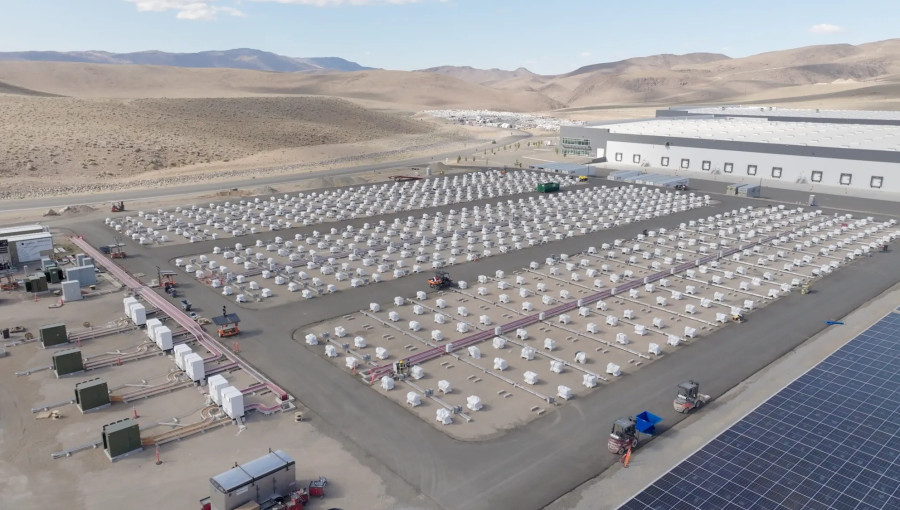
Data center developer Crusoe and Redwood Energy have announced a significant expansion of their off-grid computing facility in Sparks, Nevada, which utilizes repurposed electric vehicle batteries for power. The project will grow from four to 24 modular data centers, increasing the total power demand to 20 MW. By pairing on-site solar panels with “second-life” battery packs, the initiative demonstrates a sustainable and scalable model for powering high-performance AI workloads. This expansion follows a successful pilot phase that validated the reliability of using recycled energy storage for intensive digital infrastructure.
The collaboration between Crusoe and Redwood Energy highlights a growing trend in the tech industry to find sustainable solutions for the massive power requirements of artificial intelligence. Situated at Redwood’s battery recycling campus, the site operates via a specialized microgrid that bypasses the need for a traditional utility connection. The heart of the system is a 12 MW / 63 MWh battery array built from EV battery packs that have lost the capacity required for driving but remain highly effective for stationary energy storage.
The expansion adds 20 “Crusoe Spark” modular data centers to the existing infrastructure. these units are designed to house high-performance servers, likely equipped with NVIDIA GPUs for AI model training and inference. To generate the necessary electricity, the site employs a solar park built with Erthos technology, which utilizes a ground-mounted solar panel configuration rather than traditional trackers or fixed-tilt racks.
One of the primary technical challenges addressed by Redwood Energy is the orchestration of energy discharge from various second-life batteries, which often exhibit uneven degradation levels. Despite these complexities, the companies reported that the system has maintained 99.2% operational availability since June. While top-tier data centers typically strive for “four-nines” (99.99%) of uptime, Crusoe maintains a 99.9% reliability rate for its cloud services by leveraging the local power grid as a secondary backup when necessary.
JB Straubel, CEO of Redwood Materials, stated that the system’s performance to date proves that repurposed batteries can reliably support high-performance computing at a commercial scale. He noted that the 99.2% uptime provided the necessary confidence to expand the site’s capacity nearly sevenfold. Cully Cavness, Co-Founder of Crusoe, added that the project serves as a blueprint for the “AI factory” of the future, where modular infrastructure and innovative energy storage converge to allow for rapid scaling.
This expansion is part of a broader strategy by Crusoe to diversify its energy sources. The company also recently secured a deal for 12 GWh of energy from Form Energy, a manufacturer specializing in iron-air energy storage. These efforts reflect a concerted push to decouple data center growth from carbon-intensive energy sources through the use of advanced storage and renewable technologies.