
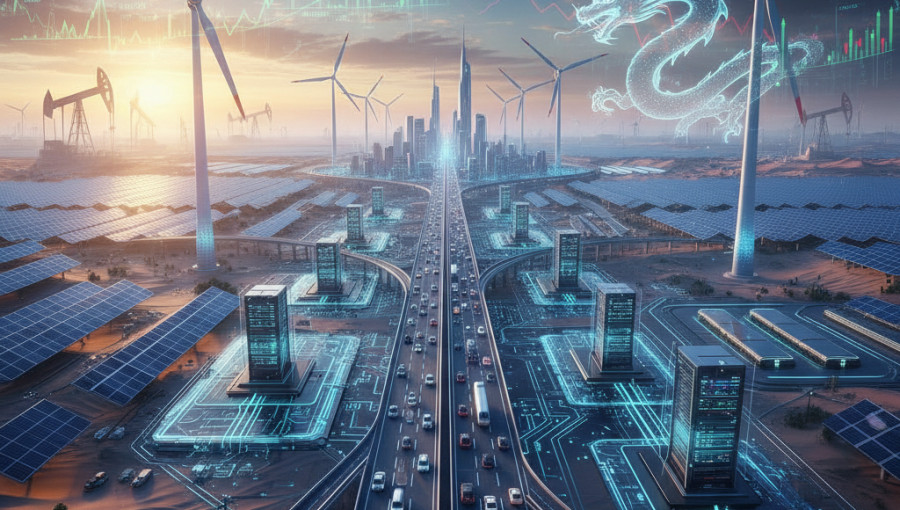
Global renewable energy capacity reached unprecedented heights in 2025, with solar and wind installations growing by 17% compared to the previous year. According to data from the think tank Ember, solar remains the dominant technology, though wind power saw a significant surge in growth rates. While China continues to lead the global transition, accounting for the majority of new projects, the expansion of green energy faces challenges from rising electricity demand driven by artificial intelligence and the electrification of transportation. Despite these hurdles, the declining costs of solar panel and wind turbine technologies are accelerating the shift away from fossil fuels.
The global energy landscape shifted further toward sustainability last year as developers installed a record-breaking amount of wind and solar capacity. Data released by Ember indicates that new additions in 2025 surpassed the previous year’s figures by 17%, continuing a multi-year trend of rapid expansion. While solar modules remain the primary driver of this growth, with installations outperforming wind by nearly four to one, the wind sector experienced a remarkable 47% increase in deployment compared to 2024. This represents a significant acceleration for wind power, which grew at more than four times the rate of solar’s 11% year-on-year increase.
Geographically, the renewable boom remains heavily concentrated, with China responsible for nearly two-thirds of all new capacity added globally. This surge in clean energy comes at a critical time as the world grapples with skyrocketing electricity demand. The rapid expansion of artificial intelligence data centers and the widespread adoption of electric vehicles and heating systems have forced many nations to continue building fossil-fueled power plants alongside green alternatives. Consequently, while wind and solar accounted for 15% of total global electricity generation in 2024, the complete displacement of carbon-intensive fuels remains a complex challenge.
Economic factors and geopolitical instability are providing additional momentum for the transition. Ongoing conflicts in the Middle East have led to volatile oil and gas prices, making domestic renewable energy an increasingly attractive option for countries seeking energy security and lower costs. The financial argument for solar panel and turbine installations is bolstered by the falling costs of energy storage solutions, such as batteries, which allow for more reliable power delivery.
Looking ahead, experts anticipate that the momentum of the renewable sector will persist despite various policy obstacles in major markets. The speed of deployment and the cost-competitiveness of these technologies make them difficult for developing and industrialized nations to ignore. As the global community strives to reduce CO2 emission levels, the continued growth of the solar and wind sectors is expected to play a central role in reshaping the international energy grid in the coming years.