
Texas is facing a critical turning point in its energy transition as shifting political priorities threaten a multi-billion-dollar renewable energy boom. For decades, rural counties relied on volatile oil cycles, but federal incentives recently sparked a $62 billion surge in wind and solar projects. This green expansion offered a financial lifeline to struggling local governments and ranchers. However, recent legislative rollbacks and local concerns over water usage and land rights have cast doubt on nearly $50 billion in projected revenue, putting thousands of jobs and significant CO2 emission reductions at risk.
In the rocky hills 48 kilometers south of San Angelo, the landscape of West Texas is defined by a striking contrast: traditional ranching operating beneath the shadows of massive wind turbines. For landowners like Duff Hallman, whose family has managed a 3,723-hectare ranch for four generations, these 76-meter structures represent more than just machinery; they are a vital economic hedge. After the oil wells of the 1980s dried up and federal subsidies for wool vanished, the transition to wind energy in 2007 provided the necessary capital to keep the ancestral land intact.
This personal success story reflects a broader regional trend. Over the last twenty years, rural Texas counties once defined by fossil fuel extraction have become the backbone of the American clean-energy buildout. The passage of the Inflation Reduction Act (IRA) in 2022 accelerated this movement, drawing over $62 billion in private investment to the state. In places like Schleicher County, where the population has dwindled to approximately 2,300 residents, renewable projects have promised tens of millions of dollars for aging schools and essential public services.
However, the political climate is changing. Recent federal policy shifts, including the “One Big Beautiful Bill Act,” have rolled back key incentives such as the production tax credit for clean hydrogen. This legislative reversal has already jeopardized or canceled more than $4 billion in planned investments. Analysts suggest that if this trend continues, Texas could see a $20 billion reduction in its gross domestic product by 2035 and an additional 83 million metric tons of CO2 emission released into the atmosphere.
The economic stakes are particularly visible in Scurry County, which hosts a dozen wind and solar farms. These installations are projected to generate nearly $1 billion for the local economy over their operational lifespans, providing a stability that oil and gas never could. Local officials note that these “abatement agreements” allow for long-term budget planning, protecting libraries and community centers from the market volatility that frequently plagues the fossil fuel industry.
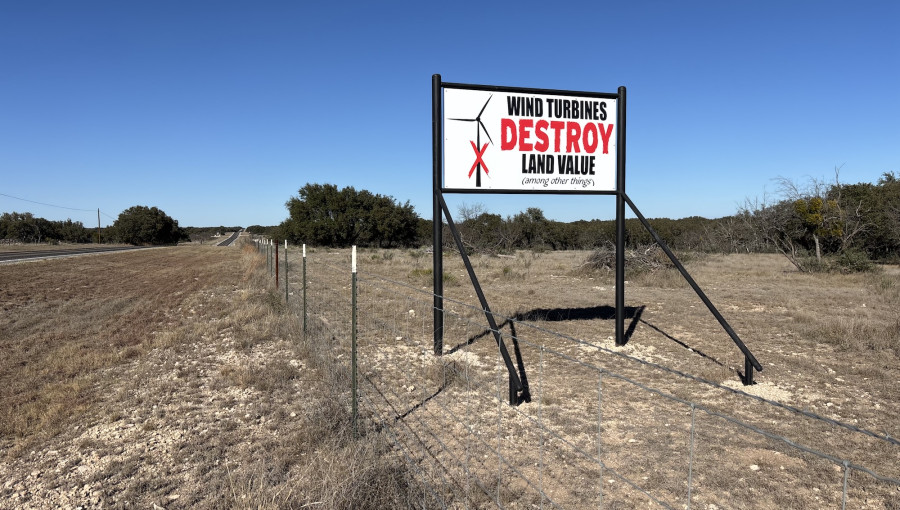
Despite the fiscal benefits, the expansion of renewables has sparked internal friction within rural communities. Some residents, led by activists like Sandra Pfeuffer, argue that the industrialization of ranchland destroys the region’s aesthetic and ecological value. Concerns regarding water rights have become a primary flashpoint, especially for projects involving hydrogen production that require significant draws from the Edwards-Trinity Aquifer. While state law often favors the rights of landowners to lease their property as they see fit, the physical footprint of new transmission lines—some stretching over 322 kilometers—remains a source of local resentment.
The infrastructure push is driven by an urgent need for power. The Electric Reliability Council of Texas (ERCOT) forecasts that peak demand will jump from 85 gigawatts to 150 gigawatts by 2030, fueled by population growth and a surge in data centers. To meet this demand, the state is investing $33 billion into a transmission “superhighway” consisting of 4,023 kilometers of high-voltage lines. As the state balances its heritage of ranching with its future as an energy titan, the survival of many small towns remains tethered to the shifting winds of federal policy and local acceptance.