
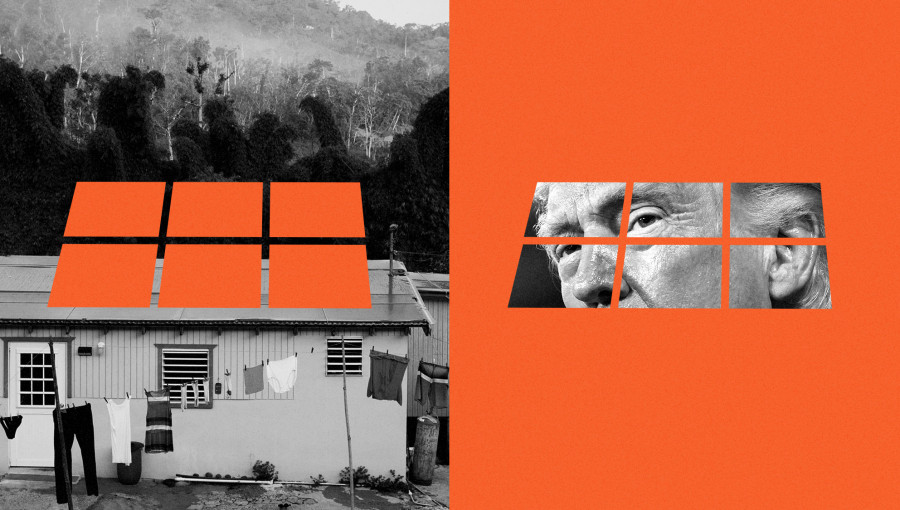
The Trump administration has officially terminated a nearly $1 billion federal program intended to provide solar panel and battery storage systems to Puerto Rico’s most vulnerable residents. The initiative, known as the Energy Resilience Fund, was established by Congress in 2022 to help low-income households and individuals with chronic medical conditions secure reliable electricity. Instead of continuing the residential rollout, the Department of Energy has redirected a significant portion of the remaining funds to the Puerto Rico Electric Power Authority (PREPA), a state-owned utility long criticized for mismanagement and financial instability.
For residents like María Pérez in Salinas, the cancellation represents a devastating setback. During Hurricane Maria in 2017, her home was submerged in nearly 91 centimeters of floodwater, leaving her without electricity for three months. Pérez, who suffers from a heart condition, requires air conditioning to manage her health during the humid summer months when temperatures frequently exceed 32 degrees Celsius. After spending over a year navigating the application process and hosting technical inspections for a solar panel installation, she was informed that the funding had been rescinded just as her home was next in line for the upgrade.
The Energy Resilience Fund was initially designed to address the catastrophic failures of Puerto Rico’s centralized power grid. While the island’s main infrastructure has historically collapsed during major storms, distributed energy systems—such as rooftop solar panels and battery storage—proved their worth during Hurricane Fiona in 2022. Reports indicated that 97 percent of solar-equipped customers maintained power during that storm, while the rest of the island faced a total blackout. Despite this success, the current administration has shifted focus toward repairing fossil fuel-based plants and traditional transmission lines.
Critics of the move point to PREPA’s poor track record as a primary concern. The utility has been in bankruptcy for nearly a decade and has utilized less than $100 million of the $17 billion previously allocated by Congress for grid modernization. Former energy officials have questioned the logic of diverting funds from a successful decentralized program to a utility with a history of chronic inefficiency. The Department of Energy defended the decision by claiming that the electric system could not support more distributed solar and that centralized repairs would benefit a larger segment of the population.
The cancellation has left local advocacy groups and nonprofits in a difficult position. Organizations like Solar United Neighbors had already identified thousands of eligible participants and developed detailed budgets for installation. Community organizers reported that residents are disheartened, having spent years gathering financial and medical documentation for a program that vanished overnight. While some residents are attempting to find private financing for solar modules, many low-income households remain at the mercy of an unreliable grid as the next hurricane season approaches.