
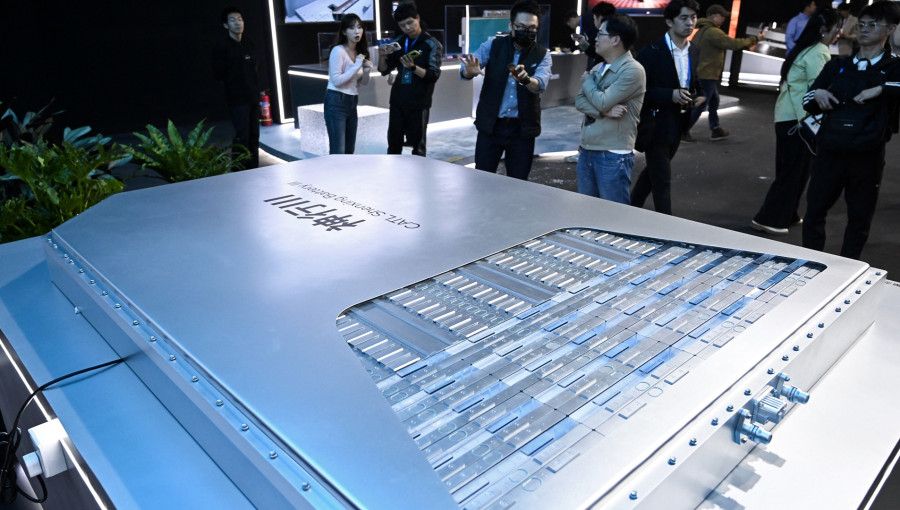
The global leader in electric vehicle battery manufacturing, CATL, has introduced two groundbreaking battery technologies aimed at eliminating range anxiety and drastically reducing charging times. During a showcase in Beijing, the company debuted an enhanced Qilin battery capable of a 1,000-kilometer range and an upgraded Shenxing battery that achieves a nearly full charge in under seven minutes. These innovations, alongside plans for sodium-ion battery production and massive infrastructure expansion, solidify CATL’s dominant position in the rapidly evolving global EV market.
Contemporary Amperex Technology Co. Limited (CATL) recently showcased its latest advancements in energy storage ahead of the Beijing Auto Show. The highlight of the presentation was the new Qilin battery, a high-energy-density pack designed for maximum efficiency. By utilizing nickel manganese cobalt (NMC) cells and a lightweight design, the battery allows electric vehicles to travel up to 1,000 kilometers on a single charge. This development is specifically tailored to help manufacturers meet increasingly stringent efficiency standards in China and international markets.
Addressing the critical hurdle of charging infrastructure, CATL also unveiled a significant upgrade to its Shenxing lithium iron phosphate (LFP) battery. The new iteration boasts the ability to charge from 10 percent to 98 percent capacity in less than seven minutes. This represents a substantial leap over previous versions, which required 15 minutes to reach an 80 percent charge. This rapid-charging capability places CATL ahead of its primary competitor, BYD, whose Blade battery currently takes approximately nine minutes to reach a 97 percent charge.
Beyond traditional lithium-based chemistry, CATL announced that mass deliveries of its sodium-ion batteries are scheduled to begin in the fourth quarter of this year. Sodium-ion technology is viewed as a vital, cost-effective alternative that reduces the industry’s reliance on expensive raw materials like lithium, cobalt, and nickel. Furthermore, the company is committing to a massive infrastructure project, planning to establish 100,000 charging and battery-swapping stations across China by 2028 in collaboration with various domestic automakers.
Chairman Robin Zeng emphasized that the field of materials science still holds vast untapped potential for the energy transition. As the primary supplier for industry giants such as Tesla, Toyota, and Xiaomi, CATL continues to expand its influence. Recent data from SNE Research indicates that CATL’s global market share grew to 42.1 percent in early 2024. By simultaneously improving range, charging speed, and alternative chemistries, the company aims to maintain its lead in a competitive landscape where performance and cost-efficiency are paramount.