
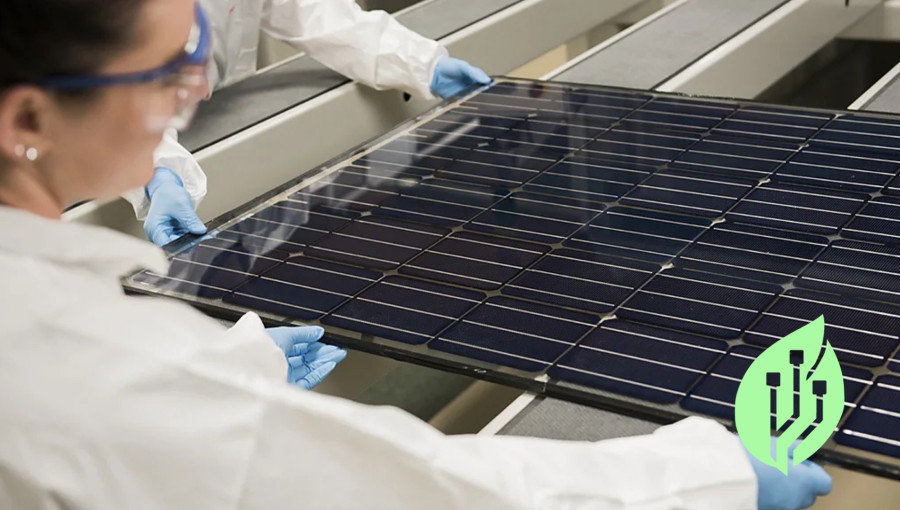
Perovskite solar cells are poised to revolutionize the renewable energy sector by offering a lighter, more flexible, and highly efficient alternative to traditional silicon panels. While solar power already contributes significantly to global electricity, perovskite technology could expand its use to vehicles, windows, and textiles. Currently, commercial efficiencies have reached nearly 30%, with tandem cells exceeding 35%. However, as Chinese manufacturers scale up production with massive gigawatt-scale factories, Western competitors like Oxford PV are racing to establish a foothold amidst challenges regarding material stability and environmental toxicity.
Solar energy has seen an unprecedented global expansion, accounting for 7% of worldwide electricity production in 2024 and rising to 13% within the European Union by 2025. Despite this growth, traditional solar module installations remain largely restricted to rigid surfaces like rooftops or dedicated solar farms. Perovskite solar cells represent a breakthrough that could change this paradigm, allowing for energy harvesting on diverse surfaces ranging from building facades to lightweight mobile applications.
Named after the mineralogist Lev Perovski due to their crystal structure, these cells utilize metal-halide compounds typically synthesized in laboratories. By blending organic compounds with metals such as lead or tin and halides like iodine, researchers have created a material that captures sunlight differently than silicon. While silicon excels at absorbing the red and infrared spectrum, perovskite solar cells are highly effective at harvesting high-energy blue and green light. This complementary nature allows for the creation of tandem solar cells that maximize total energy capture across the light spectrum.
The efficiency of these modules is rapidly climbing, with standard commercial versions reaching between 24% and 29%. Tandem configurations, which layer perovskite over silicon, have already surpassed the 35% efficiency mark in certified tests. Currently, China leads the industrial race; in early 2025, firms like GCL Optoelectronics and UtmoLight launched the world’s first gigawatt-scale production lines. UtmoLight has notably introduced a 25-year power output guarantee, signaling increased confidence in the technology’s durability for large-scale commercial projects.
In the West, the UK-based Oxford PV has emerged as a primary competitor, becoming the first to ship commercial tandem solar modules. While the company targets 30% efficiency by 2030, Europe faces a steep climb to match the manufacturing scale and speed of its Asian counterparts. Beyond market share, the industry must still address critical hurdles including the long-term stability of the materials and the management of potential toxicity. If these obstacles are overcome, perovskite technology could mirror the impact of LEDs on the lighting industry, making solar power nearly ubiquitous and more affordable than ever.