
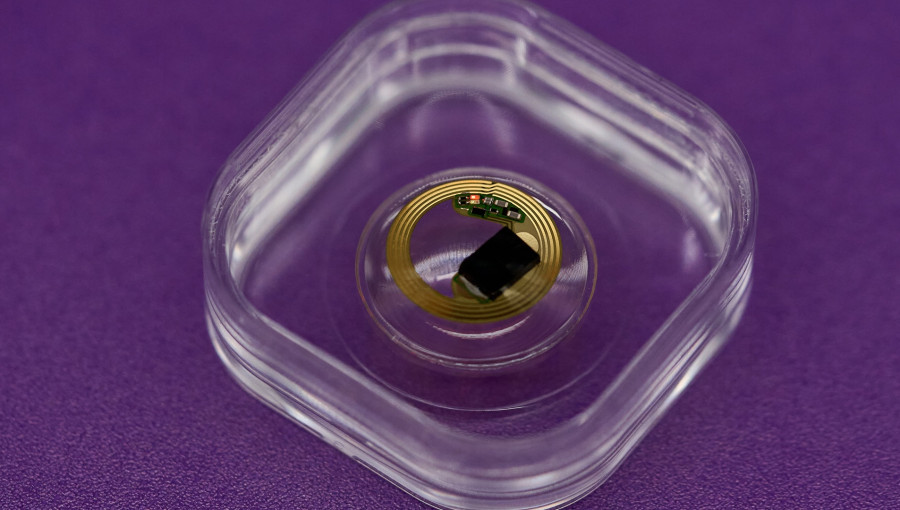
A groundbreaking collaboration between UAE-based deep-tech firm XPANCEO and French energy storage specialist ITEN has resulted in a microbattery designed to power smart contact lenses. Measuring only a few dozen cubic millimeters—roughly the size of a grain of rice—this solid-state battery utilizes patented ceramic technology to overcome the safety and size limitations of traditional power sources. This innovation paves the way for advanced ocular wearables capable of delivering augmented reality, real-time health tracking, and seamless wireless connectivity directly from the eye’s surface.
The development of this microbattery addresses one of the most significant hurdles in the wearables industry: providing reliable, high-density power within an extremely confined and sensitive space. By utilizing ITEN’s solid-state energy storage technology, the partnership aims to create a power source that is not only ultra-thin and durable but also safe for direct contact with the human eye. Unlike traditional lithium-ion batteries, which rely on liquid electrolytes, this new solid-state design eliminates risks such as swelling, leaking, or overheating.
The battery’s architecture features fully ceramic electrodes with a patented mesoporous structure. Using advanced nanomaterial techniques, the developers created ceramic electrodes filled with a network of controlled, microscopic pores. This design significantly expands the surface area available for electrochemical reactions, allowing for rapid charging and discharging. This high power density is critical for advanced functions like AR image projection, which requires a sustained milliwatt-level output that simpler energy-harvesting methods, such as blinking or body heat, cannot provide.
Safety remains a primary focus for devices worn on the eye. The ceramic-based system is inherently stable and non-flammable; the device simply ceases to function if it sustains physical damage, rather than posing a fire risk. To ensure the battery can withstand the unique environment of a soft, curved contact lens, the team implemented a multi-stage encapsulation process. This protects both the internal components of the battery and the user’s eye from potential irritation or chemical exposure.
According to the engineering team, the power system has long been the primary bottleneck in the evolution of smart contact lenses. Moving beyond minor adjustments to existing technology, the researchers developed an entirely new category of micro-scale components. While ITEN began mass-producing its first generation of solid-state ceramic microbatteries in May 2025, the current collaboration focuses on tailoring these systems to meet the specific demands of XPANCEO’s smart lens platform. As the project moves toward commercialization, it represents a significant leap toward making high-performance, eye-mounted computing a reality.