
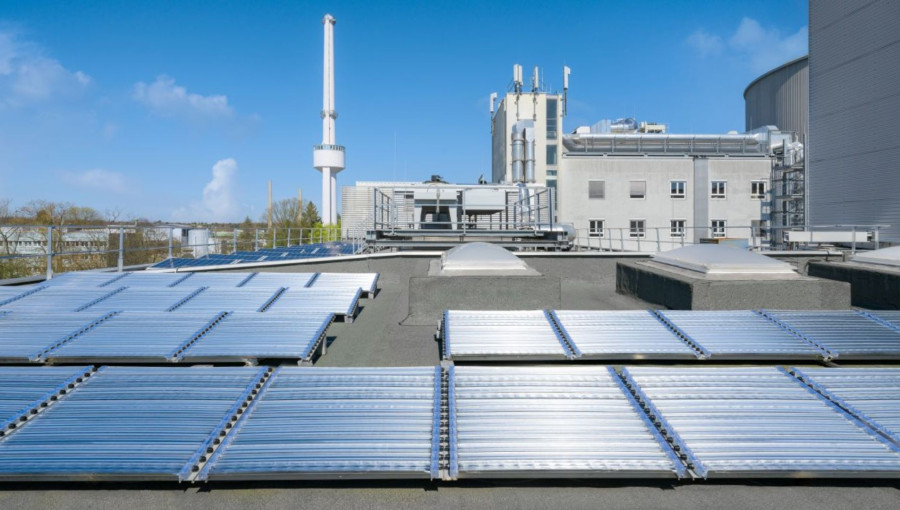
Photreon, a spin-off from the Karlsruhe Institute of Technology (KIT), has unveiled a groundbreaking photoreactor panel capable of generating hydrogen fuel using only water and sunlight. By utilizing direct photocatalysis, the system bypasses traditional, electricity-dependent electrolysis, offering a grid-independent solution for green energy production. This modular technology aims to lower costs and simplify infrastructure, making decentralized hydrogen generation accessible for industrial sites and remote regions. The innovation represents a significant shift toward more efficient, localized decarbonization strategies as the global energy sector moves away from centralized, high-cost infrastructure.
During the Hannover Messe event, Photreon showcased a one-square-meter prototype that simplifies the production of green hydrogen. Unlike standard methods that require a two-stage process—first capturing energy with a solar panel and then powering an electrolysis unit—this new technology integrates the chemical reaction directly within the panel. This approach eliminates the need for expensive external electrolyzers and traditional connections to the electrical grid, significantly lowering the barrier to entry for hydrogen adoption.
The system relies on photocatalysis, where specialized light-sensitive materials within the reactor absorb solar energy. This process excites electrons to an activated state, providing the necessary energy to split water molecules directly into hydrogen and oxygen. By consolidating these steps into a single process, the technology reduces technical complexity and minimizes the high system costs that have historically limited the widespread use of hydrogen fuel.
To ensure maximum efficiency, the team at the Karlsruhe Institute of Technology engineered a specific internal geometry for the reactor. This design, which is currently patented, optimizes the interaction between light transport and chemical reactions while facilitating the smooth removal of hydrogen gas. Because the panels are constructed from common materials and follow standard manufacturing protocols, they are well-suited for high-volume mass production.
The modular design allows for versatile deployment, ranging from small-scale rooftop installations for medium-sized enterprises to massive solar hydrogen farms in sun-drenched regions. This flexibility is particularly beneficial for industries such as food production, metalworking, and specialty chemicals that wish to meet their energy needs on-site. By enabling local fuel production, the technology provides a viable alternative for locations lacking robust power grids or established hydrogen pipeline networks.
According to Photreon’s leadership, the goal is to create a decentralized hydrogen infrastructure that removes geographical and economic barriers. By allowing businesses to generate their own fuel independently of external energy networks, the system offers a functional path forward for industrial sites that were previously considered unfeasible for green hydrogen projects. This direct-to-fuel method provides a new trajectory for the hydrogen economy, focusing on making clean energy production more direct and less reliant on centralized systems.