
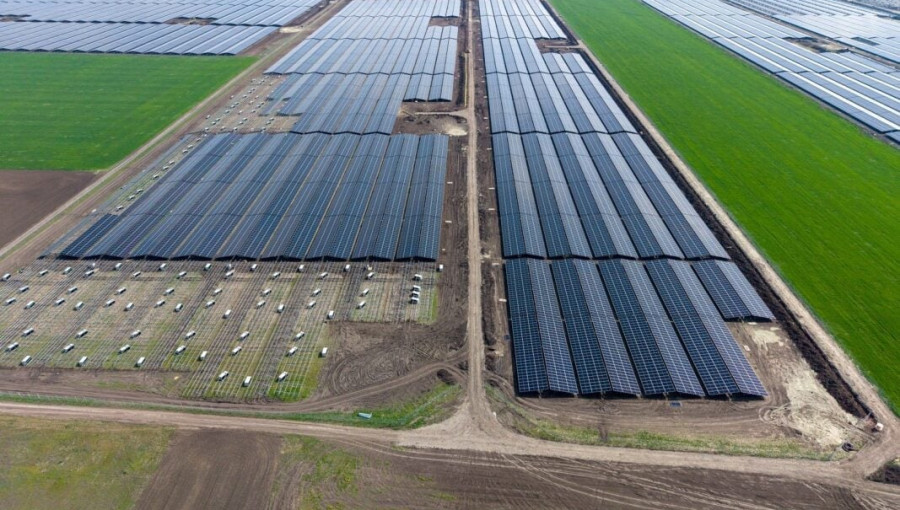
A new report from SolarPower Europe and Rystad Energy reveals that an aggressive expansion of solar energy and battery energy storage system (BESS) capacity could slash European energy operating costs by 49% by 2030. The “solar+” scenario envisions renewables making up 68% of the continent’s power mix, significantly reducing dependence on volatile fossil fuel imports. By doubling solar’s share to 26%, the EU could save €55 billion annually, while enhancing energy security and stabilizing wholesale electricity prices through increased grid flexibility and domestic clean energy production.
The “solar+” pathway challenges current base-case projections by advocating for a more rapid transition than currently planned. While standard forecasts suggest a 62% renewable share by the end of the decade, this high-ambition model pushes that figure to 68%. Central to this shift is the accelerated deployment of solar PV, which is expected to match wind energy’s contribution within the decade. The report attributes this potential growth to the unmatched speed of deployment and the increasing cost-competitiveness of solar module technology.
Transitioning away from fossil gas is a primary economic driver for the proposal. Since the onset of recent energy crises sparked by geopolitical tensions in Ukraine and the Middle East, solar generation has already offset approximately €8.5 billion in gas imports. If the solar+ strategy is fully realized, annual savings on fossil fuel imports could reach €50 billion, providing a vital buffer against the price volatility of international markets and strengthening European energy independence.
SolarPower Europe CEO Walburga Hemetsberger emphasized that a system driven by renewables is fundamentally more cost-effective than one reliant on burning fossil fuels. To achieve these targets, the trade body recommends the adoption of an “EU flexibility strategy” and a dedicated action plan for battery storage. These measures are intended to modernize the grid and support a coordinated electrification effort across all member states.
Storage is identified as the “silver bullet” for Europe’s energy transition. The solar+ scenario calls for 171GW of operational storage capacity, providing roughly 600GWh of flexibility to the grid. Sonja Risteska, head of the Battery Storage Europe Platform, noted that while these figures represent significant progress, even higher volumes may eventually be necessary to fully unlock the potential of renewables and ensure long-term grid stability for consumers.
The report predicts that day-ahead wholesale electricity prices will drop across all European markets under this high-ambition scenario. Industry experts suggest that better integration of storage not only strengthens the grid but also improves the financial viability of renewable energy projects. Several nations, including Italy, Spain, and Bulgaria, are already implementing government-backed schemes and auctions to facilitate the rapid rollout of combined solar and storage infrastructure.