
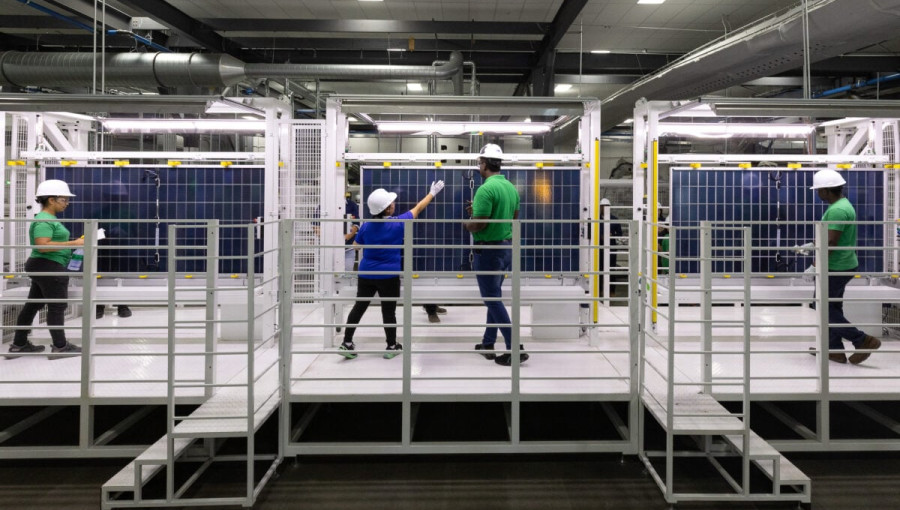
Chinese solar manufacturer JinkoSolar has finalized the sale of a 75.1% majority stake in its US operations to private equity firm FH Capital. The deal involves the 2GW solar module production plant in Jacksonville, Florida, with JinkoSolar retaining a minority share of 24.9%. This move follows a broader trend of Chinese firms divesting from US-based manufacturing assets due to tightening federal regulations and trade restrictions. FH Capital intends to significantly expand the facility’s output and introduce battery energy storage system (BESS) production to meet the rising demand for domestic renewable energy technology.
The transition of ownership at the Florida facility marks a strategic pivot for JinkoSolar as the US regulatory environment becomes increasingly complex for foreign-owned entities. FH Capital, which already holds investments in the domestic energy sector including South Carolina-based solar cell producer ES Foundry, plans to at least double the current 2GW annual solar module capacity. Furthermore, the firm aims to establish new manufacturing lines for battery energy storage systems (BESS), diversifying the site’s technological output.
Nigel Cockroft, the US general manager for JinkoSolar, noted that the partnership provides the necessary management and strategic direction to scale operations. He emphasized that the new structure is designed to better serve the growing appetite for high-performance renewable products sourced within the United States.
This divestment occurs against a backdrop of intensifying legislative pressure. The 2025 budget bill introduced Foreign Entity of Concern (FEOC) restrictions, which limit federal tax incentives for projects or manufacturing sites with significant Chinese ownership or influence. Coupled with anti-dumping and countervailing duties (AD/CVD) and domestic content requirements, these measures have made it increasingly difficult for Chinese manufacturers to operate directly in the American market.
JinkoSolar is not alone in this retreat; other major players like Trina Solar and JA Solar have recently sold or reduced their interests in US-based assembly plants. While US domestic manufacturing capacity has surged to approximately 50GW, the industry remains divided over the impact of protectionist policies. Major domestic producers, such as First Solar and Hanwha Qcells, have advocated for stricter trade enforcement to protect local investments from foreign competition.
However, some industry analysts warn that aggressive trade barriers could create a bottleneck in the supply chain. While module assembly is growing rapidly, the US still faces a shortage of domestic upstream components, such as solar cells and wafers. Without a robust local supply of these essential parts, experts suggest that US-made products may face significant pricing pressure, potentially slowing the overall transition to renewable energy despite the push for domestic independence.
