
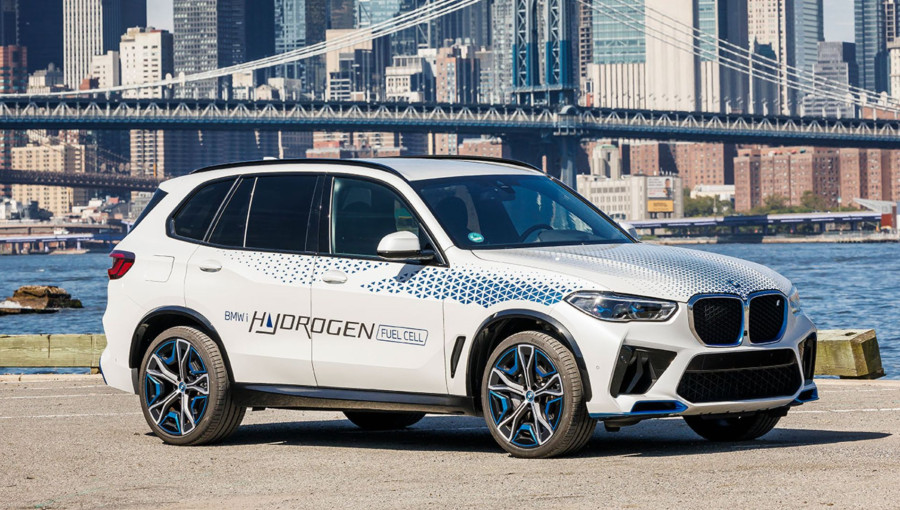
German Transport Minister Patrick Schnieder recently visited Japan to underscore a strategic partnership between Germany and Japan focused on advancing hydrogen fuel cell technology. During the visit, Schnieder utilized both a BMW iX5 Hydrogen and a Toyota Crown FCEV, highlighting the collaborative effort between the two automakers to develop a third generation of fuel cell systems. This initiative aims to diversify transportation energy sources beyond battery-electric vehicles and fossil fuels. With BMW planning a series-production hydrogen model by 2028 and both nations setting ambitious hydrogen capacity targets, the partnership seeks to establish more efficient, compact, and scalable hydrogen-powered mobility.
The collaboration involves a direct exchange of expertise, with BMW employees relocating to Japan to work alongside Toyota engineers. While BMW intends to manufacture its upcoming hydrogen vehicle in Austria, Toyota will continue production in Japan. This joint development is a critical component of a broader energy partnership established between the two countries in 2019. By focusing on hydrogen, both nations hope to reduce their reliance on traditional internal combustion engines and create more resilient supply chains, acknowledging that battery-electric technology alone may not be sufficient to meet all future transportation demands.
Scaling green hydrogen—produced using renewable electricity—remains a significant hurdle for both countries. Germany anticipates a surge in demand by 2030 and recognizes that it will likely need to import large volumes of hydrogen to supplement domestic production. Japan, meanwhile, is targeting an annual capacity of 12 million tons by 2040 and is exploring the use of ammonia as a hydrogen carrier. To support these goals, Schnieder visited key infrastructure sites in Japan, including the world’s first liquid hydrogen terminal in Kobe and fuel cell pilot projects at Kansai Airport.
Government support is playing a pivotal role in these developments. Germany has committed €220 million to expand its hydrogen infrastructure, specifically targeting the deployment of 40 refueling stations and 400 hydrogen-powered trucks. Daimler Truck is already operating the country’s first liquid hydrogen refueling station for heavy vehicles, as Germany aims for 75 percent of new commercial vehicle sales to be emission-free by 2030. Through these combined industrial and governmental efforts, Germany and Japan are positioning hydrogen as a vital, albeit currently niche, alternative to fossil fuels in the global automotive sector.