
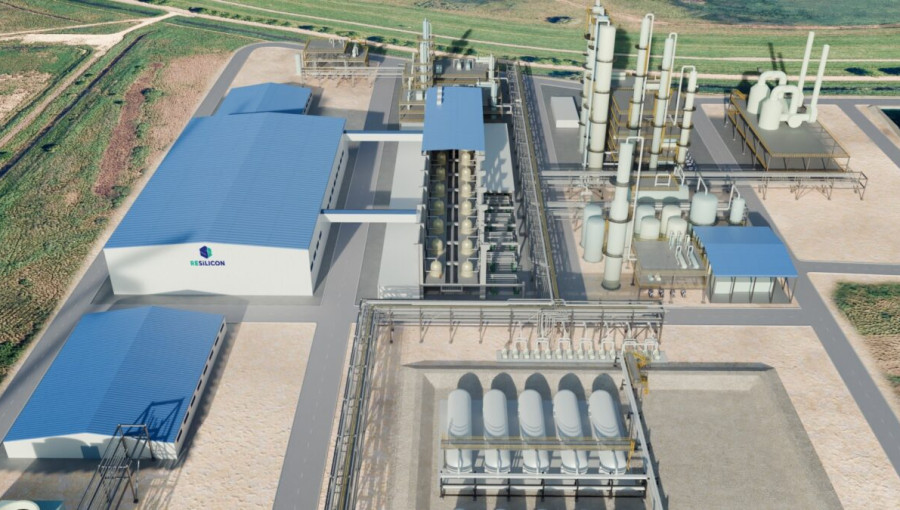
Dutch startup Resilicon is spearheading an effort to revitalize European polysilicon production, aiming to overcome the continent’s historical reliance on lower-cost Asian supply chains. By leveraging renewable energy from North Sea wind farms and focusing on high-purity, premium-grade silicon, the company seeks to carve out a niche in the semiconductor and solar PV sectors. With over €14 million in initial funding and government support, Resilicon plans to build a facility in the Netherlands, arguing that strategic policy frameworks and a focus on industrial resilience can make domestic production a viable, long-term alternative to current market volatility.
The production of polysilicon is notoriously energy-intensive, requiring ultra-high purity levels—often reaching 11N or 12N—to meet the stringent demands of the semiconductor and solar industries. While established Asian manufacturers currently dominate the market through massive scale and lower costs, Resilicon’s leadership believes that Europe can differentiate itself through cleaner production methods and a circular supply chain. The company intends to utilize the Siemens process to manufacture its materials, with a primary focus on producing high-value silicon that serves both the solar PV market and the growing demand for silane in battery anode applications.
Resilicon’s business model relies on a flexible output strategy, allowing the firm to shift production between polysilicon and specialty gases based on real-time market demand. The company is currently finalizing its basic engineering phase and targets an initial annual capacity of 13 kilotons, with long-term goals to scale up to 30,000 metric tons. Executives note that while current global polysilicon prices are suppressed by overcapacity, this market state is unsustainable. They argue that a shift toward premium-grade materials, supported by stable regulatory environments and potential trade measures, will allow European producers to compete effectively without relying solely on price.
Central to the company’s vision is the integration of low-cost, green electricity. By locating its plant in the Groningen Sea Ports area, Resilicon aims to capitalize on the expected surplus of offshore wind power. Leadership suggests that as renewable energy capacity grows, the resulting decline in electricity prices will provide a structural advantage for energy-intensive industries. However, they emphasize that private investment alone is insufficient. To succeed, they argue that European policymakers must formally recognize silicon as a critical material, providing the necessary regulatory stability and temporary protective measures to ensure a level playing field against global competitors.