
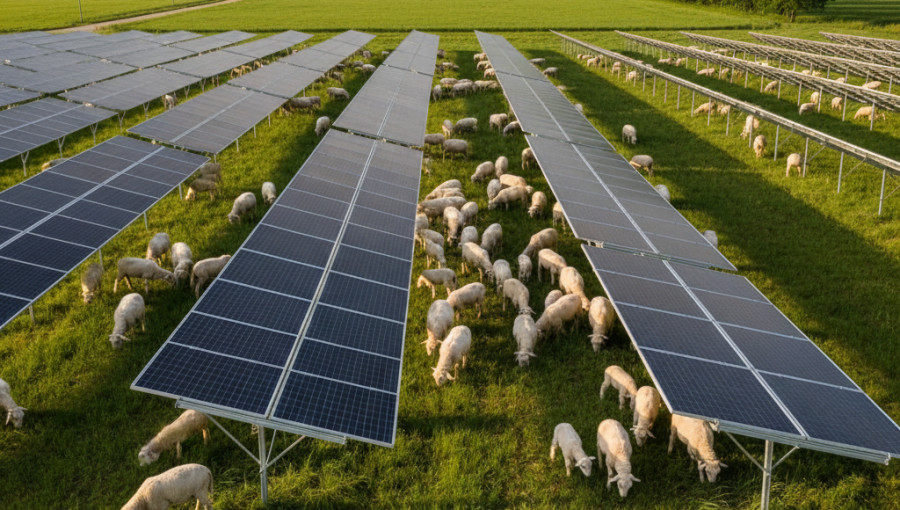
A growing trend in rural America is seeing farmers integrate livestock grazing with utility-scale solar installations, a practice known as agrivoltaics. In Dunlap, Illinois, Bryant Parker of Tin Can Farms utilizes a 7.1-megawatt solar farm to provide pasture for his flock of 75 sheep. By grazing the animals beneath the solar panels, Parker manages the vegetation on the 35-acre site, which previously produced corn and soybeans. This innovative approach allows the land to serve a dual purpose, generating enough clean energy to power approximately 1,200 homes while simultaneously supporting local agricultural operations and livestock management.
The shift toward combining renewable energy infrastructure with active farming began when Parker noticed the proliferation of solar developments in his region. Recognizing the potential for utilizing the vast amounts of grass growing beneath the solar modules, he proactively contacted energy firms to propose a grazing partnership. His initiative has since expanded, with Parker now managing his herd across multiple solar sites throughout central Illinois.
For the sheep, the environment remains largely indifferent to the technology overhead. According to Parker, the animals focus primarily on the quality of the forage. By maintaining the vegetation, the sheep provide a natural, efficient maintenance solution for solar operators, while farmers like the Parkers gain access to additional grazing land. This symbiotic relationship highlights how renewable energy projects can coexist with traditional agriculture, offering a practical solution for land use in rural communities as the solar industry continues to expand across the country.