
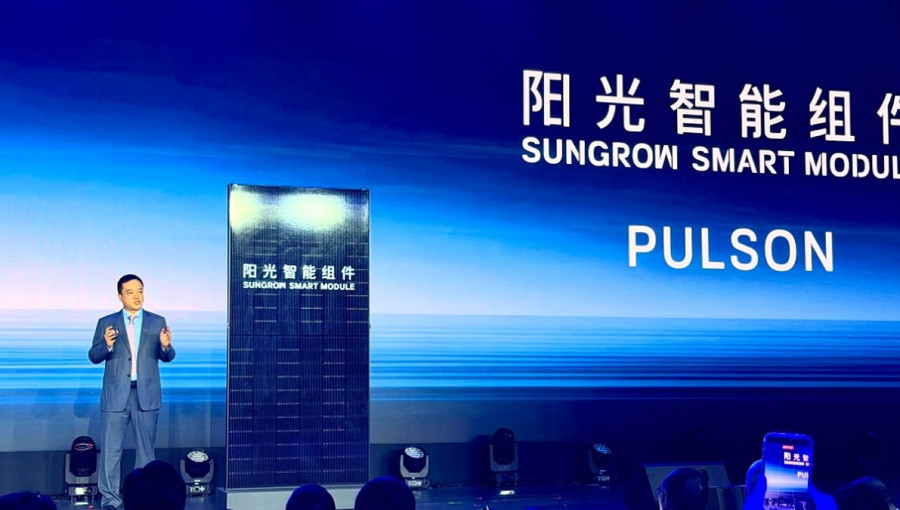
Sungrow Renewables has introduced Pulson, an advanced solar PV module designed to shift hardware from passive power generation to an active, intelligent terminal. Unveiled at the 2026 Intelligent Technology Conference in Shanghai, the module integrates AI algorithms with power electronics to provide five core capabilities: self-diagnosis, rapid shutdown, self-cleaning, self-cooling, and self-logging. By incorporating these features, the company aims to enhance operational safety, performance, and maintenance efficiency. The product has already received high-efficiency smart module certification from TÜV SÜD, marking a significant step in the integration of artificial intelligence into solar energy infrastructure and plant management.
The Pulson module utilizes nano-scale hydrophilic surface treatments and proprietary Silver Ant cooling technology, which Sungrow claims can boost power generation by approximately 6%. Beyond performance gains, the module prioritizes safety by enabling rapid shutdown capabilities that can reduce total plant voltage to human-safe levels within 25 seconds during emergencies. This performance exceeds current international standards, offering a robust solution for large-scale solar installations. Each unit also functions as an independent digital entity, automatically logging lifecycle data, health metrics, and carbon footprint information to ensure comprehensive operational oversight throughout the product’s lifespan.
During the launch, Sungrow Renewables collaborated with TÜV SÜD and the Shanghai Artificial Intelligence Institute to release a white paper establishing a new classification system for smart modules. This system ranks technology from L1 to L4, with the Pulson module currently meeting the L2 Active Safety Intelligence standard. Furthermore, the company showcased its iBuilding BIPV 2.0 solution, which is designed to increase installed capacity on rooftops by 20%. While Sungrow has not explicitly detailed its long-term manufacturing strategy, industry reports suggest the company is leveraging OEM and ODM partnerships to define technical specifications while optimizing project costs.