
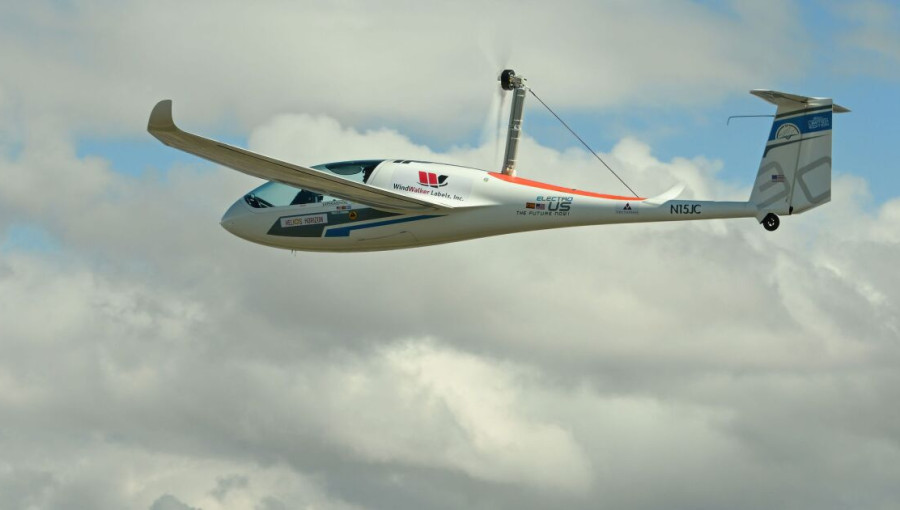
Aviation history was made on June 5 at Zephyrhills Municipal Airport in Florida, where test pilot Miguel Iturmendi successfully completed the first crewed flight of a fixed-wing aircraft powered by solid-state batteries. The Helios Horizon, a modified motorized glider, utilized this advanced battery technology to achieve a significant increase in energy density compared to traditional lithium-ion systems. By replacing liquid electrolytes with solid materials, the aircraft benefits from improved safety and a 60% boost in energy capacity. This milestone represents a critical advancement in electric aviation, potentially paving the way for more efficient, long-range commercial flight in the future.
The transition from conventional lithium-ion batteries to solid-state technology addresses a fundamental limitation in electric flight: the energy-to-weight ratio. While standard lithium-ion batteries rely on liquid electrolytes that limit energy storage, the new solid-state cells installed in the Helios Horizon reached 410 Wh/kg, a substantial improvement over the previous 260 Wh/kg. Beyond the increased energy density, these cells offer enhanced resistance to heat and physical damage, which significantly lowers the risk of fire. Founder Miguel Iturmendi anticipates that energy density will climb by another 40% within the next two years, further enhancing the aircraft’s performance.
The Helios Horizon is designed for versatility, featuring the ability to charge via standard AC outlets or through fast-charging systems that reach 80% capacity in under 15 minutes. To maximize endurance, the aircraft incorporates wing-mounted solar panels and a regenerative system that allows the propeller to function as a wind turbine during descents, effectively recapturing energy while in flight. These features are integrated into a platform that already holds the world altitude record for its weight class at 24,000 feet. The team now aims to reach a commercial cruising altitude of 40,000 feet later this year.
While other industry players, including EHang, CATL, and a partnership between Airbus and Renault, are actively developing solid-state or high-density battery technologies, most remain in the demonstrator phase. The Helios Horizon flight stands out as a pioneering move toward regulatory certification. As research into higher energy densities continues to accelerate, the successful test of this solid-state propulsion system marks a pivotal shift in the feasibility of electric aviation, moving the industry closer to sustainable, medium-haul commercial travel by the 2030s.